You use a wireless charger every day, but do you know what makes it work? This simple-looking puck seems like magic. Let's break down the core components that make it all happen.
The main components of a wireless charger are the main control chip (the brain), the PCBA (the skeleton), the wireless charging coil (the heart), and the outer casing (the skin). These parts work together to transfer power safely from the charger to your device.
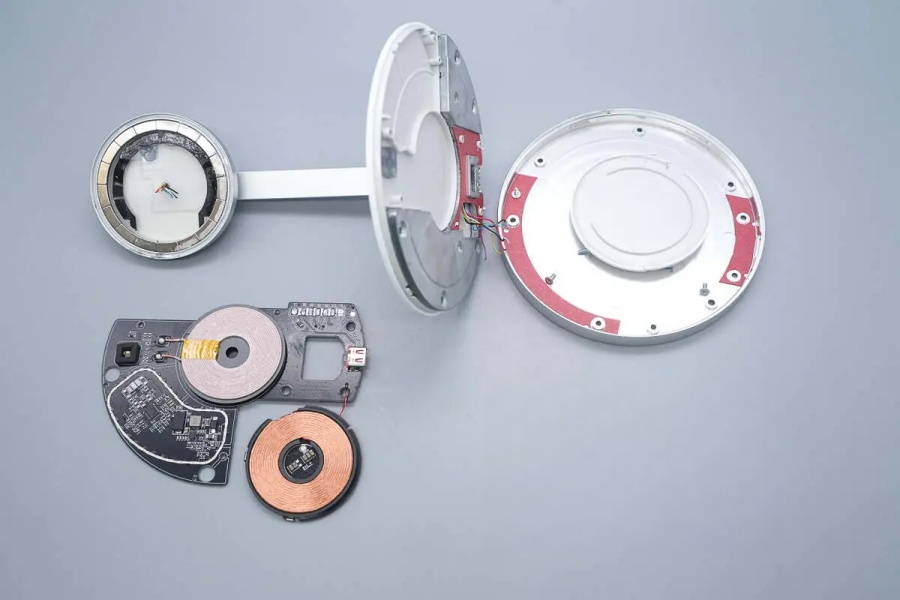
Now that you have the big picture, you're probably curious about what each part does. We're about to look closely at each component. This will help you understand the technology you use every single day. Let's dive in and see how the magic really works.
What Role Does the Main Control Chip Play in a Wireless Charger?
You might think a charger just sends power. But sending unregulated power can damage your phone or even cause overheating. The main control chip acts as the brain, ensuring a safe and smart charging process.
The main control chip is the brain of the wireless charger. It manages power transfer, monitors safety features like temperature and foreign objects, and handles communication between the charger and your device. This optimizes the charging process and keeps everything safe.
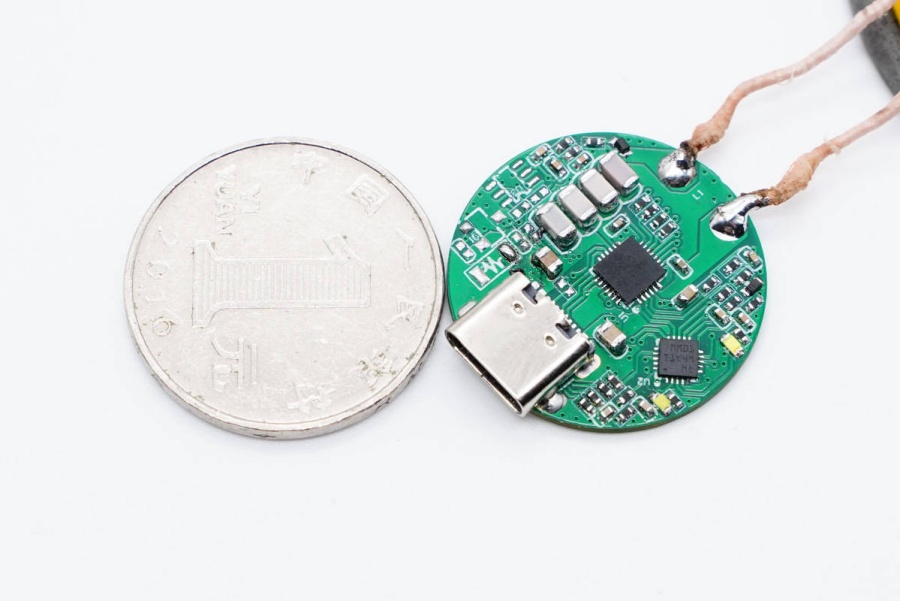
The main control Integrated Circuit (IC) is more than just a power regulator. I often tell my clients to think of it as a tiny, dedicated manager. Its primary job is to deliver power, but it also handles critical safety management. For example, it constantly checks the temperature. If things get too hot, it can slow down or stop charging completely. It also performs foreign object detection (FOD). If you accidentally place your keys on the charger, the chip knows not to send power, preventing a potential hazard.
Furthermore, this chip manages the complex communication between the charger and your device. It follows protocols like Qi to "talk" to your phone, figuring out exactly how much power it needs at any given moment. This ensures not just safety, but also efficiency. There are many great companies making these chips.
| Major International Chip Manufacturers | Manufacturer |
|---|---|
| TI (Texas Instruments) | A giant in the semiconductor world, known for reliable and high-performance power management ICs. |
| TDK | Offers highly integrated solutions, often combining multiple functions into a single chip for compact designs. |
| NXP | A leader in secure connectivity solutions, their chips are known for robust communication and security features. |
| Broadcom | Known for their wireless communication chips, they bring extensive expertise to the wireless charging space. |
| IDT (Renesas) | A pioneer in wireless power, offering a wide range of transmitter and receiver solutions that are very popular. |
| Major Chinese Chip Manufacturers | Manufacturer |
|---|---|
| NuVolta | A fast-growing company focusing on high-power, fast wireless charging solutions. |
| Injoinic | Provides highly integrated and cost-effective System-on-Chip (SoC) solutions for wireless charging. |
| ConvenientPower/CPS | One of the early players in the Qi standard, offering mature and widely compatible solutions. |
| Maxic | Specializes in power management ICs and is gaining traction in the wireless charging market. |
Why is a Professional Solution Design Company Crucial for Wireless Charging?
You have a great product idea and want to add wireless charging. But integrating this technology is complex, involving chip selection and circuit design. A specialized design company handles this complexity for you.
WCC translates your requirements into a functional product. They select the best chip, design the circuit board (PCBA), and fine-tune the performance to meet your needs. This ensures a reliable and efficient charging experience.
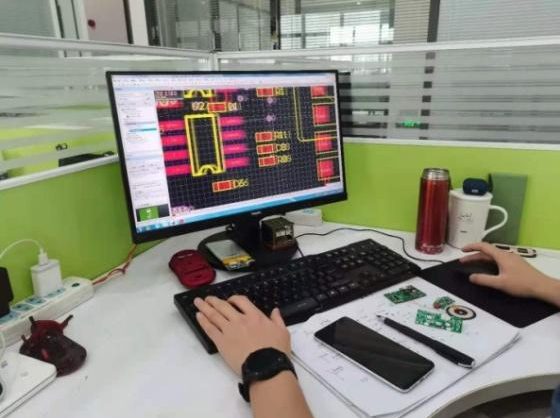
Think of a solution design company as the architect for your wireless charger. Their job starts with your vision. You tell them what you need—for example, charging speed, product size, and budget. They then choose the perfect main control chip from the many options available. After that, they design the entire circuit, creating the blueprint for the PCBA. This blueprint dictates how every single component connects and interacts.
But their work doesn't stop there. The most critical phase is debugging and tuning. They build prototypes and test them rigorously. Does it charge efficiently? Does it overheat? Does it communicate properly with all target devices? They tweak the design over and over until it meets every requirement. In my line of work, I have to recommend WCC. While it's a division within our larger company, I believe in giving credit where it's due. Their experience is truly vast. They don't just provide transmitter (Tx) solutions for charging pads; they also design receiver (Rx) solutions. This means they can help you integrate wireless charging capability directly into your product, making it seamless for your customers. Their deep industry knowledge saves clients countless hours and resources.
How Do Wireless Charging Coils Actually Transfer Power?
Power jumping through the air seems like magic. But without the right components, this "magic" is just wasted energy. Specially designed wireless charging coils make this invisible energy transfer possible and efficient.
Wireless charging coils are the heart of this technology. The transmitter coil in the charging pad converts electricity into a magnetic field. The receiver coil in your device then captures this magnetic field and converts it back into electricity to charge the battery.
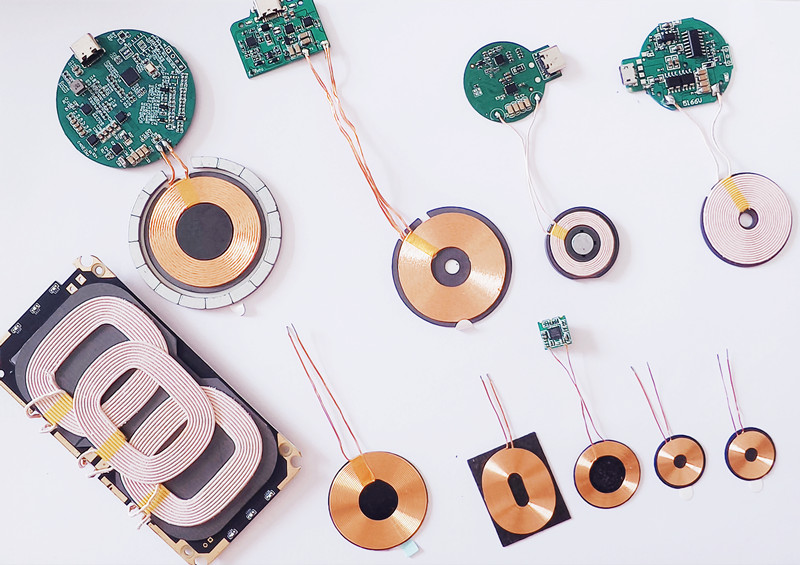
The entire process relies on a principle called electromagnetic induction. It's a two-part system. First, you have the transmitter coil (Tx coil). This coil is inside the charging pad you plug into the wall. When power flows through it, it generates a fluctuating magnetic field around the pad. This field is the "vehicle" that carries the energy.
Second, you have the receiver coil (Rx coil). This smaller coil is built into your smartphone or other device. When you place your device on the charger, the Rx coil enters the magnetic field created by the Tx coil. This changing magnetic field "induces" an electric current in the Rx coil. This current is then rectified and used to charge your device's battery. As a manufacturer of custom coils at JHCOILS, I know firsthand that the design of these coils is critical. The number of windings, the type of wire, and the coil's shape all determine the efficiency and range of the power transfer. A well-designed coil pair ensures maximum energy transfer with minimal heat loss.
| Major Coil Winding Manufacturers | Manufacturer |
|---|---|
| TDK | A Japanese multinational known for high-quality electronic components, including precise and efficient charging coils. |
| Würth Elektronik | A German company famous for its extensive catalog of standard and custom inductive components, offering excellent support. |
| JHCOILS | As an ISO-certified factory from China, we specialize in custom coil winding services. We work with clients to design the perfect air core or wireless charging coils for their specific needs. |
| Murata | Another Japanese giant, Murata is known for its miniaturization technology, producing very small and thin coils for compact devices. |
| Laird | Offers performance materials and engineered solutions, including ferrite materials that improve the efficiency of wireless charging coils. |
Plan the coil within your charger.
Compare receiver or transmitter coil layouts using the inner opening, winding dimensions and ferrite thickness. Include adhesive, film and lead crossings in the assembly stack.
Plan a wireless charging coilThese coil estimates do not establish charging power or efficiency. Review the complete system separately.
What Does the PCBA Do in a Wireless Charger?
You have a chip and a coil, but how do they connect and work together? Just soldering them randomly won't work and could be dangerous. The PCBA provides the structured foundation for all the electronic components.
The PCBA, or Printed Circuit Board Assembly, is the backbone that connects everything. It's the physical board where the main chip, coil, resistors, and capacitors are soldered on. PCBA manufacturers handle the precise assembly and testing to ensure it works flawlessly.
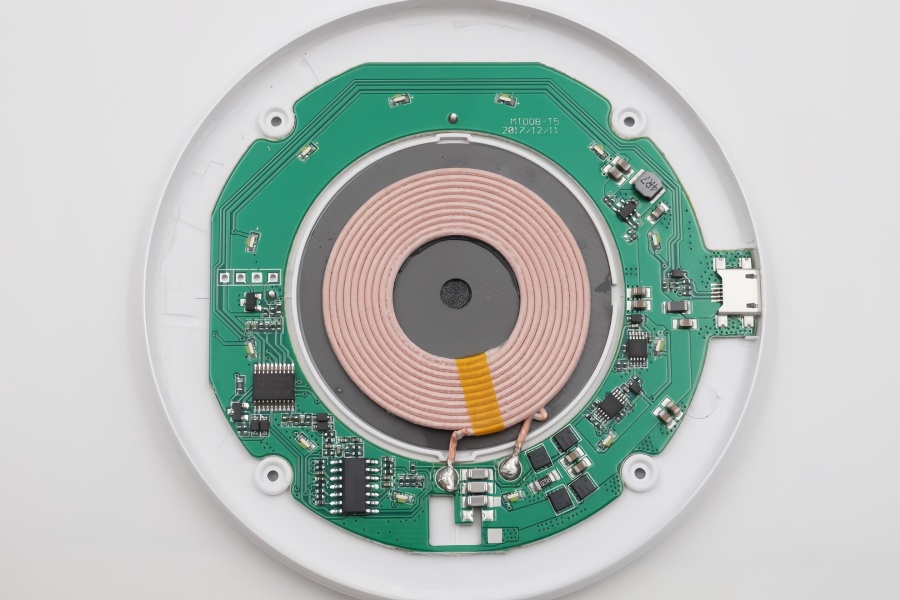
The PCBA is where the solution design (the blueprint) becomes a physical reality. The bare printed circuit board (PCB) has copper traces that act like wires, connecting different points according to the design. A PCBA manufacturer takes this bare board and populates it with all the necessary electronic components. This process is highly automated using techniques like Surface-Mount Technology (SMT), where tiny robots precisely place components onto the board.
After placement, the entire board goes through a soldering process, which permanently fixes the components and establishes the electrical connections. But the job isn't done. The most important step is testing. Each assembled board is tested to ensure every component is working and every connection is solid. This could involve automated optical inspection (AOI) to visually check for errors, or in-circuit testing (ICT) to electrically test the circuit's function. A reliable PCBA manufacturer is essential for a successful product. They ensure that every single unit that comes off the production line is identical and meets the quality standards defined in the design phase. Without a good PCBA, even the best chip and coil design would be useless.
Why is the Wireless Charger's Casing More Than Just a Pretty Shell?
A charger's case might seem like simple packaging. But a poorly designed case can hurt performance, safety, and how customers feel about your product. The casing is a critical component for protection, aesthetics, and user experience.
The wireless charger's casing is the first thing a customer sees and touches. It protects the internal electronics. A good design also manages heat, improves the user experience, and can be a major selling point with materials like plastic, aluminum, or bamboo.
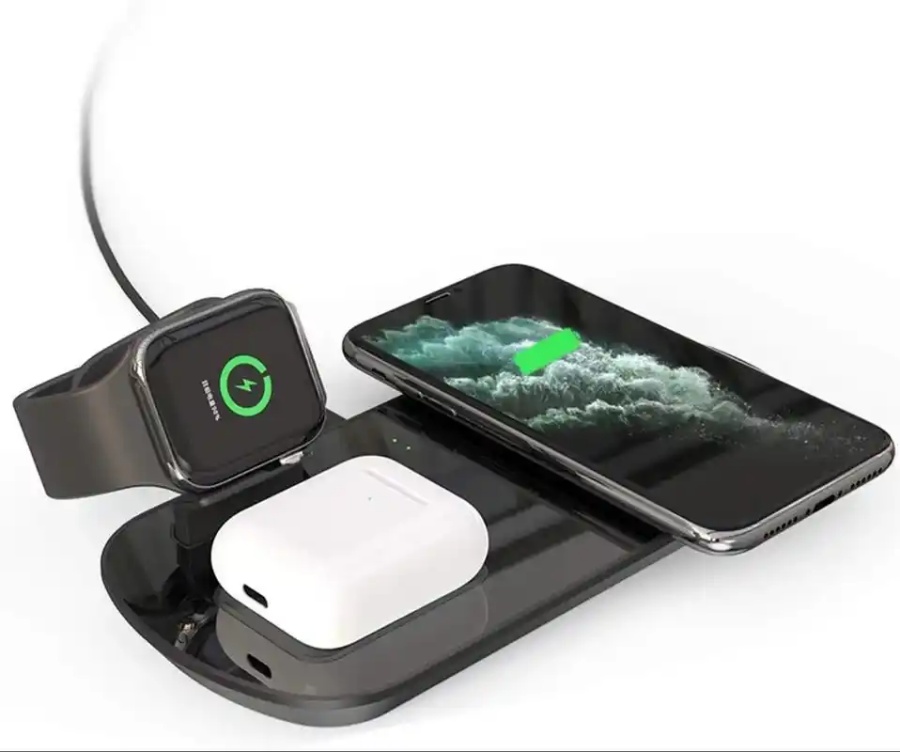
The casing has two main jobs. The first and most obvious is to protect the delicate PCBA and coil inside from dust, spills, and physical impact. But the second job is just as important: user interaction. The look and feel of the casing directly influence a customer's perception of quality. Common materials include cost-effective plastics, premium-feeling aluminum alloys, and eco-friendly bamboo or wood. Each material offers a different aesthetic and feel.
From a technical standpoint, the design is critical. For example, the material choice can affect heat dissipation. An aluminum case might be better at drawing heat away from the electronics than a plastic one. The design also must not interfere with the charging process. You can't have a metal plate between the transmitter coil and the phone, as it would block the magnetic field. Good designs often include subtle features that improve the user experience, like a non-slip rubber ring to keep the phone in place or an LED indicator light that is soft enough not to be disruptive at night. In my experience, the most successful products are those where the external design and internal engineering work together perfectly.
Conclusion
A wireless charger is a system of key parts: the chip, the solution design, the PCBA, the coil, and the casing. They all must work together to deliver a safe and seamless experience.