Tired of tangled cables and worn-out charging ports? Inductive charging offers a clean, cable-free solution to power your devices effortlessly, removing daily frustrations.
Inductive wireless charging uses electromagnetic fields to transfer energy between two objects. A transmitter coil in a charging pad creates a magnetic field, which induces an electrical current in a receiver coil inside your device, charging its battery without any physical connection.
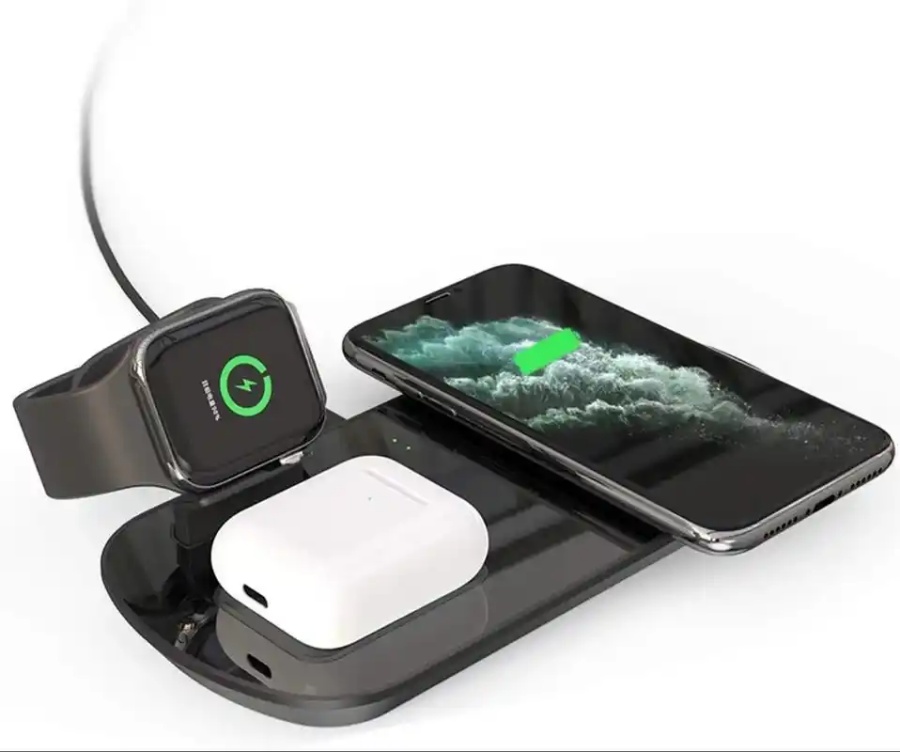
This technology might seem complex, but the science behind it is straightforward and elegant. I remember the first time I worked with a client to integrate a custom wireless charging coil1 into their new product. Seeing it power up without any wires was a genuine 'wow' moment. It showed me this was the future. Let's break down exactly how this impressive technology functions.
How Do Transmitter and Receiver Coils Make Wireless Charging Possible?
Confused about the "magic" behind wireless power? The secret isn't some complex trick. It all comes down to the precise interaction between two specially designed coils.
A transmitter coil, powered by an AC source, generates a fluctuating magnetic field. The receiver coil, placed within this field, captures the magnetic energy and converts it back into electrical current to charge a device. The design of these coils is critical for efficiency.
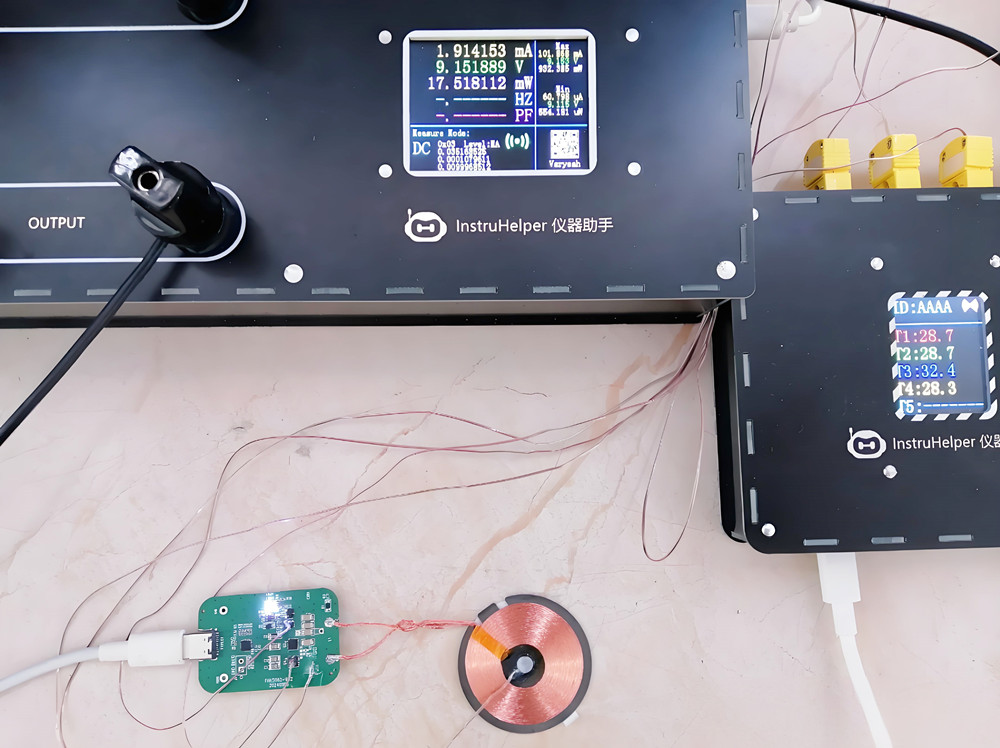
At our factory, we live and breathe coils. They are the heart of inductive charging. Think of them as a team of two players passing energy back and forth. One throws, and the other catches. The better they are designed to work together, the more efficient the energy transfer.
The Transmitter Coil (Tx)
The transmitter coil2 is the "thrower." It's typically located in the charging base or pad that you plug into the wall. When electricity flows through this coil, it generates a magnetic field around it. For many applications, an air core coil3 is used, meaning there is no metal core. This design choice affects the field's shape and strength. The goal is to create a stable and consistent magnetic field ready to transfer power.
The Receiver Coil (Rx)
The receiver coil is the "catcher." This smaller, thinner coil is built directly into the device you want to charge, like a smartphone or wearable. When you place your device on the charging pad4, the receiver coil enters the magnetic field created by the transmitter. This field "induces" a current in the receiver coil, which is then converted into DC power to charge the battery. As a manufacturer providing custom coil winding, we know the precision of this coil is everything for performance.
| Feature | Transmitter Coil (Tx) | Receiver Coil (Rx) |
|---|---|---|
| Location | In the charging pad/base | Inside the device (e.g., phone) |
| Function | Generates a magnetic field | Captures magnetic energy, induces current |
| Typical Size | Larger, with more turns | Smaller, thinner, compact design |
| Power Source | Connected to a power outlet | Receives power wirelessly |
Design for a thinner receiver.
Explore enamelled wire, winding geometry and flexible ferrite as part of the total receiver stack.
Explore receiver coil designChoose Receiver Coil in the calculator.
Compare a transmitter winding.
Explore litz construction, coil geometry and rigid ferrite for a transmitter design.
Explore transmitter coil designChoose Transmitter Coil in the calculator.
What Are the Key Principles Behind Inductive Charging Technology?
Does the science of wireless charging seem intimidating? It's actually based on a couple of core physics principles that are surprisingly straightforward once you break them down.
The technology relies on electromagnetic induction, a principle discovered by Michael Faraday. An alternating current in one coil creates a changing magnetic field, which then "induces" a current in a nearby second coil. This is how energy is transferred through the air.
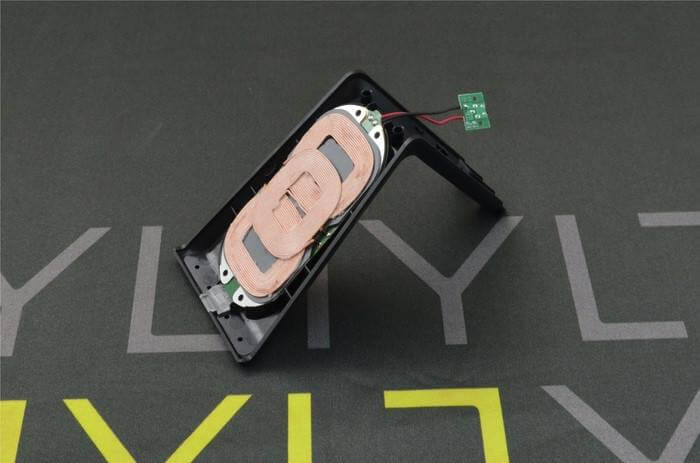
Understanding these principles helps you appreciate why the design of each component is so important. It's not just about putting two coils near each other; it's about tuning them to work in perfect harmony. This is where good engineering makes all the difference.
Electromagnetic Induction
This is the foundational concept. In the 1830s, Michael Faraday discovered that a changing magnetic field could create, or "induce," an electrical voltage in a nearby wire loop. In wireless charging, we intentionally create this effect. The transmitter coil2 produces a constantly changing magnetic field because it's powered by an alternating current (AC). This changing field is the engine that drives the whole process.
The Role of Resonance
To make the energy transfer more efficient, modern systems use resonant inductive coupling. This means the transmitter and receiver circuits are tuned to operate at the same frequency. Think of it like a singer shattering a glass with their voice. The singer's voice (transmitter) matches the natural resonant frequency of the glass (receiver), causing it to vibrate powerfully. By tuning the wireless charging coil1 system, we can transfer power over slightly greater distances and with better efficiency, even if the coils aren't perfectly aligned. As a coil winding service5 provider, achieving this precise frequency tuning is a common request from our clients.
| Step | Action | Component Involved |
|---|---|---|
| 1 | AC power from the wall is supplied. | Charging Pad Electronics |
| 2 | Current flows through the transmitter coil. | Transmitter Coil (Tx) |
| 3 | A changing magnetic field is generated. | Space between coils |
| 4 | The magnetic field induces a current. | Receiver Coil (Rx) |
| 5 | AC current is converted to DC current. | Device's Charging Circuit |
| 6 | The battery is charged. | Device's Battery |
What Are the Pros and Cons of Using Inductive Charging in Your Product?
Thinking of adding wireless charging to your next device? It offers great benefits but also has some limitations. You need to weigh both sides before making a design decision.
The main advantages are convenience, enhanced durability from sealed devices without ports, and improved safety. However, disadvantages include lower efficiency, the need for precise alignment, and a shorter charging distance compared to wired methods.
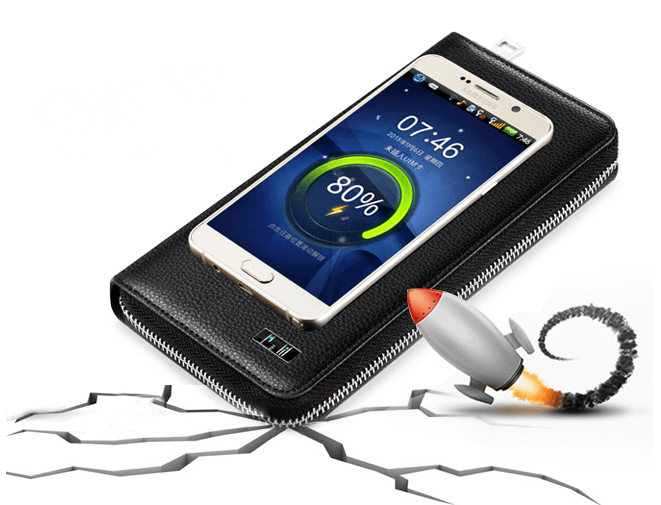
For product designers and engineers, the decision to integrate wireless charging is a strategic one. I've seen clients celebrate the sleek, port-less designs it enables, but I've also helped them tackle challenges like heat management and component costs.
Advantages for Product Designers
Integrating wireless charging can be a major selling point. It allows for fully sealed devices, which dramatically improves water and dust resistance—a huge plus for consumer electronics and medical devices. It also eliminates the mechanical wear and tear associated with physical connectors, leading to a longer product lifespan. From a design perspective, it offers a cleaner, more minimalist aesthetic that many users prefer.
Challenges to Overcome
The primary challenge is efficiency. Some energy is always lost as heat during the transfer, so wireless charging is inherently less efficient than a direct wired connection. This heat must be managed to protect the battery and other internal components. Another challenge is alignment; the user must place the device in a specific "sweet spot" on the pad for charging to work optimally. Finally, the cost of the extra components—the wireless charging coil1 and control circuitry—must be factored into the product's bill of materials.
| Aspect | Advantage / Disadvantage | Implication for Product Design |
|---|---|---|
| Convenience | Advantage | Greatly improves user experience; just drop and charge. |
| Durability | Advantage | Enables port-less, sealed designs that are more resistant to water, dust, and damage. |
| Efficiency | Disadvantage | Generates more heat than wired charging, which must be managed through design. |
| Alignment | Disadvantage | Requires precise placement, though multi-coil pads can improve this. |
| Cost | Disadvantage | Adds cost and complexity to the product's bill of materials and design. |
Why is Custom Coil Winding Crucial for Optimal Wireless Charging?
Are off-the-shelf coils limiting your product's performance? Standard components can cause inefficiency and heat issues. A custom solution is the key to unlocking your device's full potential.
Custom coil winding allows you to tailor the coil's geometry, wire type, and inductance to your specific device. This optimizes charging efficiency, minimizes heat generation, and ensures a perfect fit within your product's form factor, which standard coils cannot guarantee.
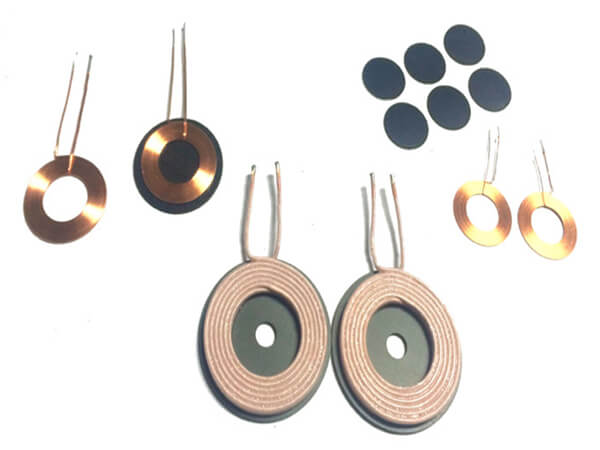
In my years as a provider of custom coil winding services, I've seen firsthand that a one-size-fits-all approach just doesn't work for high-performance products. An off-the-shelf coil might function, but it will never perform as well as one designed specifically for your application.
Matching Form Factor and Power Needs
Every device is different. A tiny medical implant has vastly different space and power requirements than a large industrial tablet. A custom coil winding Process allows us to create an air core coil3orwireless charging coil1that fits perfectly within your mechanical constraints while being optimized for your specific power transfer needs. This is impossible to achieve with standard parts.
Maximizing Efficiency and Minimizing Heat
The performance of a wireless charging system is directly tied to the coil's design. Factors like the wire gauge, the number of turns, the shape of the coil, and shielding materials all have a massive impact on efficiency and heat generation. By customizing these parameters, we can fine-tune the coil to maximize power transfer and minimize energy loss as heat. As an ISO certified factory based in China, we have the expertise and quality control to produce coils that meet these exact specifications, helping our clients build better, more reliable products.
| Feature | Off-the-Shelf Coil | Custom Wound Coil |
|---|---|---|
| Efficiency | Standard, not optimized | Maximized for the specific application |
| Form Factor | Fixed size and shape | Designed to fit the product perfectly |
| Heat Generation | Can be higher due to inefficiency | Minimized through optimized design |
| Performance | Generic, may be inconsistent | Fine-tuned for specific power and frequency |
| Integration | May require design compromises | Seamless integration with product mechanics |
Conclusion
Inductive charging is transforming how we power devices. Understanding its core components, especially the coils, is key to designing successful, efficient, and user-friendly products for the future.
Learn about the design and function of wireless charging coils in the charging process. ↩
Discover the function and importance of the transmitter coil in the charging process. ↩
Find out why air core coils are preferred in certain wireless charging applications. ↩
Learn about the components and functionality of charging pads in wireless charging. ↩
Discover how coil winding services can optimize product performance in wireless charging. ↩