Choosing the right coil feels complicated. Making the wrong choice can compromise your entire design. This guide simplifies the decision between self-bonding and bobbin coils for you.
The best coil depends on your priority. Choose a self-bonding air core coil for small size, light weight, high Q-factor, and design freedom. Choose a bobbin coil for simple winding, lower cost, excellent consistency, and easy mass production.
The quick answer gives you a starting point. But the details are what really matter for your project's success. Let's dig deeper into the differences so you can select your coil with complete confidence. Understanding these details will help you avoid costly mistakes and get the best performance from your product.
What Are the Core Structural Differences?
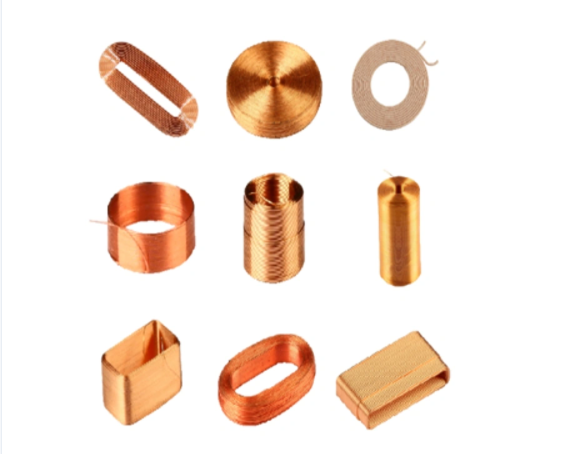
You can see they are built differently. But what does that mean for your application? Misunderstanding their basic construction can lead to choosing a coil that just won't work.
A self-bonding coil is made from wire with an adhesive coating. We wind it, heat it, and the wires fuse together into a solid, freestanding form. A bobbin coil1 is simply wire wound onto a plastic or insulating frame that provides support and structure.
How a Self-Bonding Coil is Made
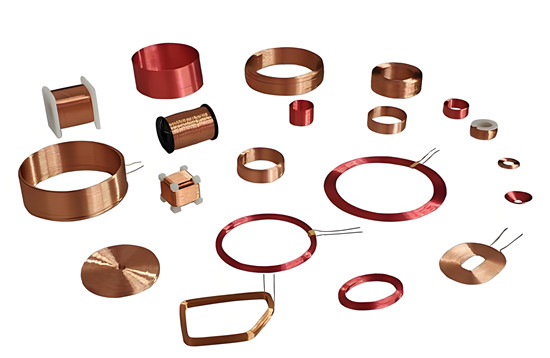
A self-bonding coil is unique because it has no internal support frame. The magic is in the wire itself. It's coated with a special adhesive layer. During manufacturing, we wind this wire onto a temporary mold. Then, we apply heat or hot air. This process melts the outer adhesive layer, causing the individual wire strands to stick to each other. Once it cools, the coil holds its shape perfectly without any bobbin. It becomes a rigid, lightweight component that is completely hollow. This "air core" structure is its defining feature and is key to its unique electrical properties.
How a Bobbin Coil is Made
A bobbin coil1, sometimes called a frame coil, is more straightforward. We take standard magnet wire and wind it directly onto a pre-formed plastic or insulating bobbin. This bobbin acts as the skeleton of the coil, giving it its shape, size, and mechanical strength. The bobbin can be a simple hollow tube, or it can be designed to accept a ferrite core later. Adding a core turns it from a simple air core inductor into a magnetic core inductor, which dramatically increases its inductance. The bobbin makes the entire structure very robust and easy to handle.
| Feature | Self-Bonding Air Core Coil | Bobbin Coil |
|---|---|---|
| Support Structure | None; wires are self-adhered | Plastic or insulating bobbin/frame |
| Core Material | Air only | Air, or a magnetic core can be added |
| Formation Method | Winding then heating to bond | Winding onto a permanent frame |
How Do Their Key Performances Compare?
The spec sheets are full of numbers. But which ones will actually impact your circuit? Choosing based on the wrong performance metric will degrade your product's function and reliability.
Self-bonding coils excel in high-frequency applications due to a higher Q-factor and have perfect linearity. Bobbin coils offer superior mechanical strength and dimensional consistency, and can achieve higher inductance values when a core is used, making them great for general-purpose applications.
A Deeper Look at Performance Metrics
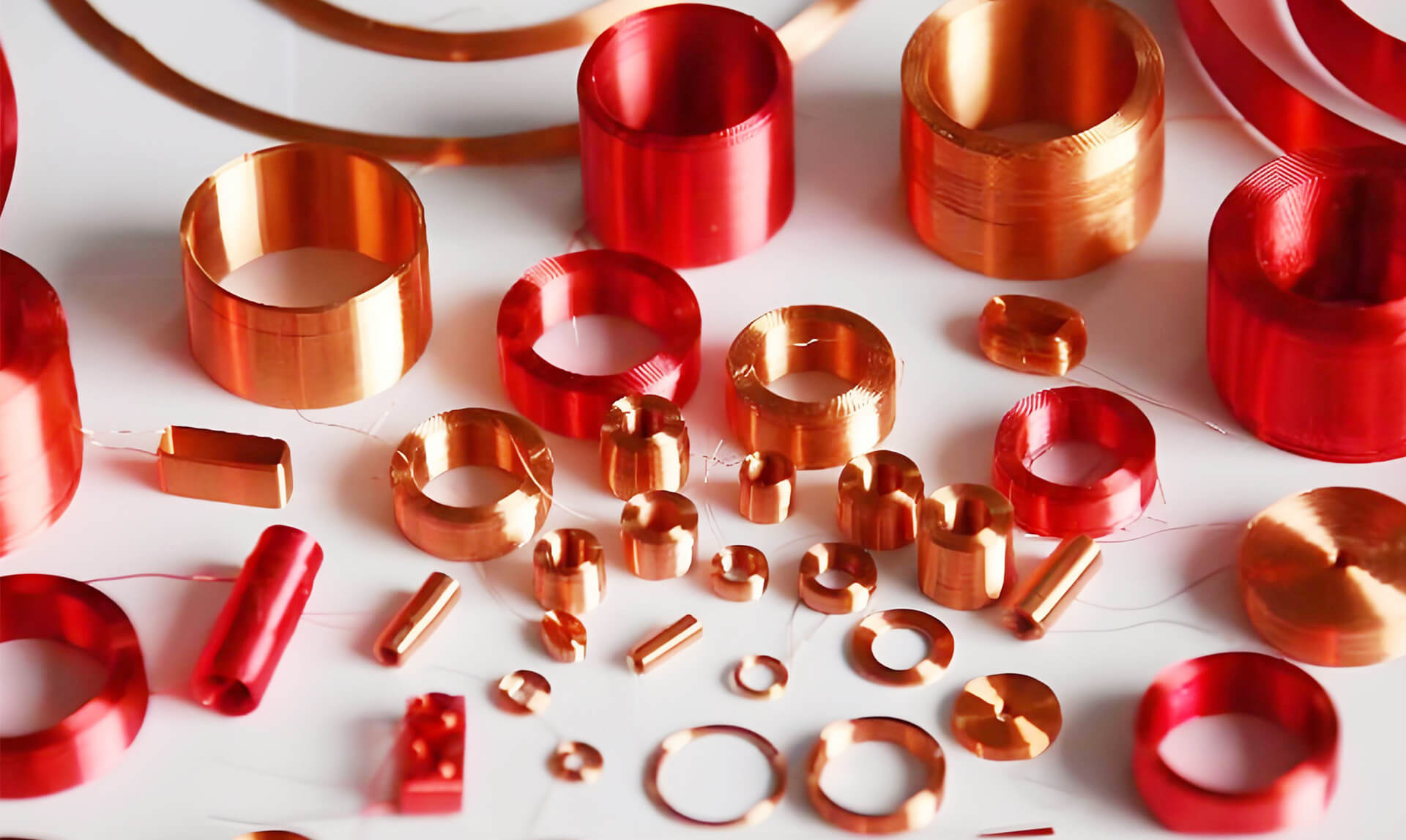
The choice between these two coils often comes down to a trade-off between electrical performance and physical robustness. For high-frequency circuits like those in RFID or wireless charging, the properties of a self-bonding coil are often superior. Its lack of a bobbin means there is no dielectric material to absorb energy and lower the Q-factor. This results in a more efficient component. Also, because its core is just air, its inductance remains constant regardless of the current, meaning it will never saturate.
On the other hand, if your application requires a coil that can withstand physical stress, vibration, or needs to have extremely consistent dimensions from one unit to the next, a bobbin coil1 is usually the better choice. The solid frame provides excellent protection and ensures that every coil is identical. The ability to add a ferrite core also means you can achieve a much higher inductance in the same physical space compared to an air core coil.
| Performance Metric | Self-Bonding Air Core Coil | Bobbin Coil |
|---|---|---|
| Inductance Density | Lower for a given volume. | Higher (especially with a core). |
| Q-Factor (High Freq.) | Higher. No bobbin dielectric loss. | Lower. Bobbin material adds loss. |
| Linearity / Saturation | Excellent. Air core never saturates. | Can saturate with a core at high current. |
| Dimensional Accuracy | Good, but depends on process control. | Excellent. Defined by the bobbin. |
| Mechanical Strength | Fair. Can deform under stress. | Better. Frame provides robust support. |
| Parasitic Capacitance | Lower. Cleaner for high-frequency signals. | Higher. Capacitance between wire and bobbin. |
Check the coil geometry.
Estimate inductance, winding dimensions and copper weight for a supported air-core geometry.
Design an air-core coilFor supported round and rectangular windings.
Check the available winding space.
Estimate winding capacity and inspect layer build from bobbin dimensions and finished wire size.
Check bobbin winding capacityUse the actual winding surface and traverse dimensions.
What Are the Process and Cost Implications for Manufacturing?
A great coil design is useless if it's too expensive or slow to produce. Your choice has a direct impact on manufacturing feasibility, speed, and final cost.
Bobbin coils are faster and cheaper for mass production because they use a simple, automated process. Self-bonding coils are more complex and slower to make due to a required heating step, which also makes manual prototyping difficult and costly.
The Reality of Coil Production
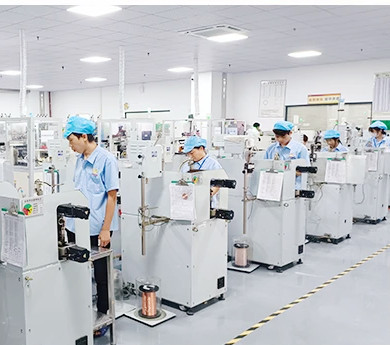
In our factory, we see these differences every day. Winding a bobbin coil1 is very straightforward. We load a standard bobbin onto a high-speed automated machine, and it winds the wire quickly and efficiently. It's a process built for speed and volume, which keeps the per-unit cost low.
Self-bonding coils are a different story. The process is more involved. We need to create a precise winding mold first. Then, the automatic winding machine not only winds the wire but must also apply a specific temperature, usually around 350°C, to melt the wire's coating and bond the coil together. This extra heating and cooling step slows down production. It's also why making a few handmade samples is so challenging. I often get requests from clients asking for just a handful of prototypes for testing. For a bobbin coil1, that's easy. But for a self-bonding coil, we have to create the mold and set up the entire automated heating process, which just isn't practical for a few pieces.
| Manufacturing Aspect | Self-Bonding Air Core Coil | Bobbin Coil |
|---|---|---|
| Winding Difficulty | High (requires tension control, heat, mold) | Low (wind directly onto standard frame) |
| Production Efficiency | Slower (extra heating/curing step) | Fast (ideal for high-speed automation) |
| Prototyping | Difficult and expensive for small batches | Easy and cheap for samples |
| Automation Suitability | Requires specialized automated machines | Excellent for standard automated winders |
Conclusion
Choose self-bonding coils2 for compact, high-frequency designs. Opt for bobbin coil1s for robust, cost-effective, high-volume production. The right choice depends entirely on your project's most important priorities.