Your project needs a unique coil shape, but standard coils just don't fit. You feel stuck with a design problem. We can help you solve this complex engineering challenge.
Odd-shaped air core coils are custom components that are not round, square, or oval. We manufacture them using two main methods: creating special winding molds or performing secondary shaping after winding. This allows us to create coils that fit perfectly into your unique product design.
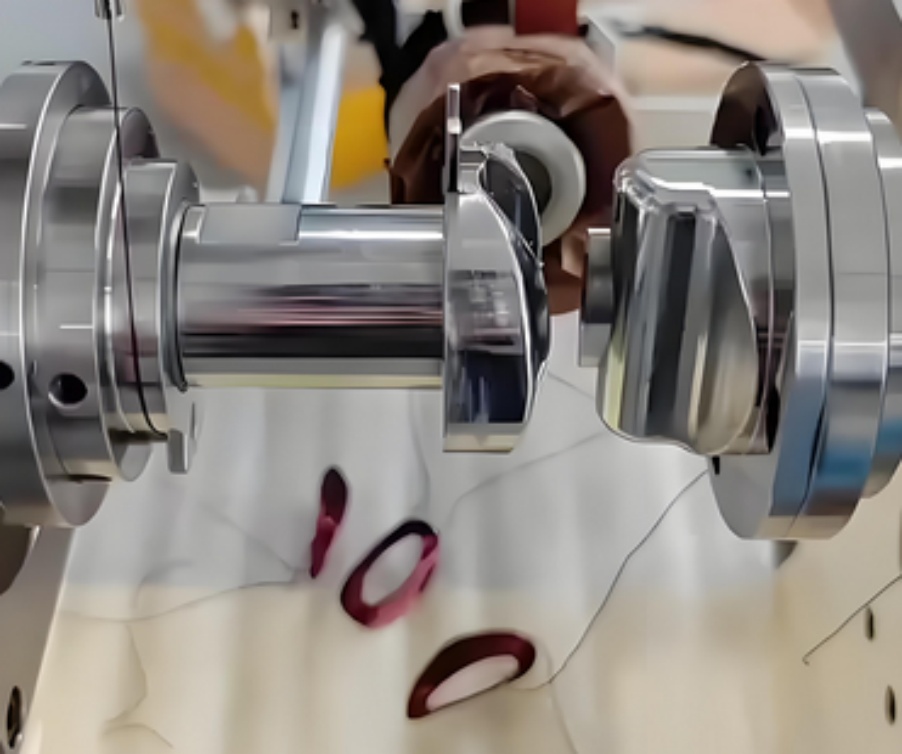
I remember a client a few years ago who was developing a new type of handheld medical scanner. They needed a sensor coil that was shaped like a crescent moon to fit around another component. It was a real head-scratcher at first. Standard manufacturing methods were out of the question. This project forced us to perfect our techniques for creating truly custom, non-standard coils. It taught us that with the right approach, almost any coil shape is possible. This experience is why I'm confident we can handle even the most unusual designs. Let's dive into what makes these coils so special and how we bring them to life.
What Defines an Odd-Shaped Air Core Coil?
You hear the term "odd-shaped coil" and wonder what it really means. Is your design considered odd? The definition can be confusing. Let me clarify exactly what we mean.
An odd-shaped air core coil is any coil that does not have a standard symmetrical geometry like a circle, square, or oval. Its shape is custom-designed for a specific function or to fit into a product with tight space constraints.
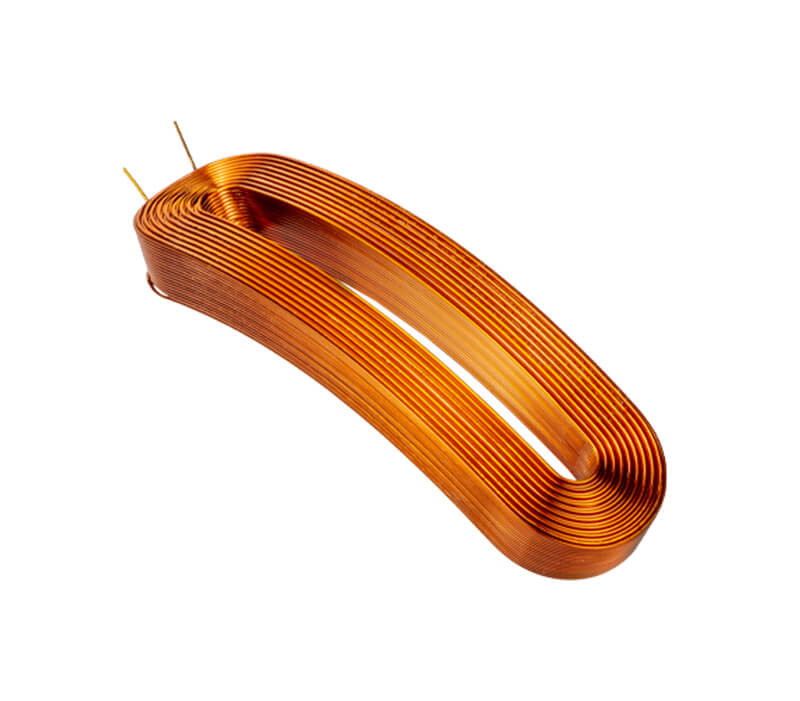
An odd-shaped coil is defined by its departure from standard, easily manufacturable forms. In our factory, we handle thousands of round and rectangular coils every day. These are simple because the physics are predictable and the winding machines are standardized. But when a design requires a non-symmetrical, irregular, or multi-angled shape, it enters the "odd-shaped" category. This is where our custom coil winding service truly shines.
Real-World Applications
These coils are not just odd for the sake of it; they solve real-world engineering problems.
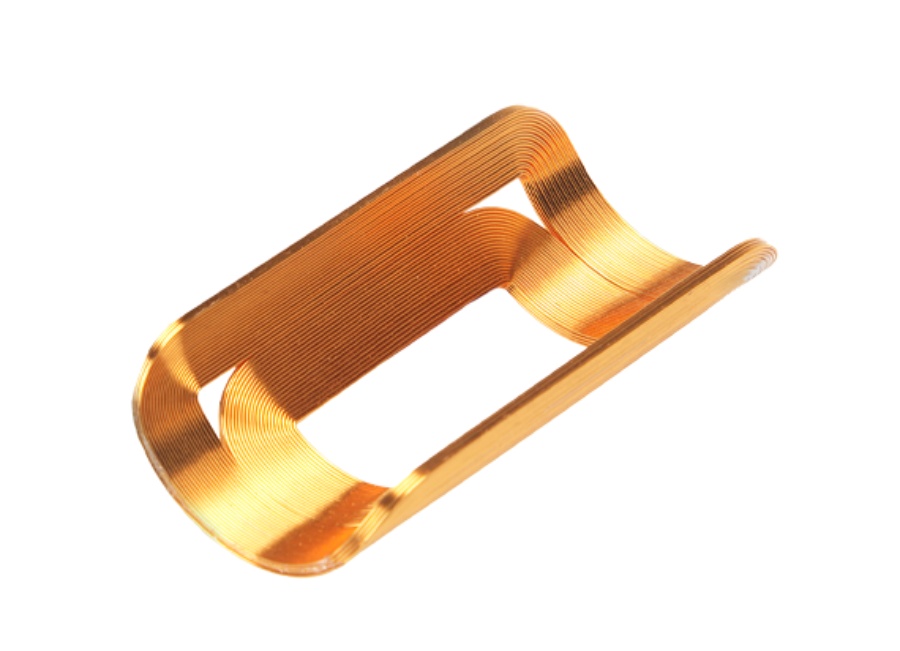
- Coreless Motor Coils: Many coreless or "cup" motors use skewed or slanted windings to reduce cogging torque. These coils are wound and then formed into a unique cup shape.
- Voice Coils: While many are circular, some high-performance speakers use voice coils1 with specific profiles to optimize magnetic flux and movement.
- Linear Motor Coils: These often consist of long, flat arrays of coils that are anything but round, designed for linear motion.
Standard vs. Odd-Shaped Comparison
| Feature | Standard Coils (Round, Square) | Odd-Shaped Coils |
|---|---|---|
| Geometry | Symmetrical, simple | Asymmetrical, complex, custom |
| Tooling | Standardized molds and mandrels | Custom-designed molds, jigs, and fixtures |
| Winding Process | High-speed, highly automated | Slower, often semi-automated or requires manual steps |
| Cost | Lower due to efficiency | Higher due to NRE, complexity, and slower cycle times |
| Use Case | General electronics, power supplies | Medical devices, robotics, aerospace, custom sensors |
How Do We Manufacture These Custom-Shaped Coils?
You have a unique design, but you wonder how it can be made reliably. The process seems complicated. You might worry about feasibility and quality. We have a clear, proven process.
We manufacture odd-shaped coils mainly through two methods. First, we use custom-designed winding molds for direct shaping. Second, we perform secondary post-winding shaping using jigs and presses. This dual approach ensures precision.
The entire process begins with your design. We take your 3D model or detailed drawing and start planning the manufacturing strategy. Our engineers decide whether to create a complex mold for direct winding or to use a secondary shaping process. This decision depends on the coil's complexity, the wire type, and the required production volume. As an ISO-certified factory, our goal is always to create a repeatable and reliable process from the very first sample.
The Importance of Custom Tooling
The heart of making any odd-shaped coil is the tooling. This isn't an off-the-shelf part. We design and fabricate the winding mold, or mandrel, in-house based on your exact specifications. We use CAD software to model the tool, ensuring it will produce a coil that matches your 3D file perfectly. The material for the mold is also critical. We might use hardened steel for a long production run of thousands of coils, or a softer material like Delrin for prototypes, which makes it easier to remove the coil without damaging the fine wire. This initial tooling design is the most critical step to ensure success.
The Two-Step Manufacturing Process
Direct Winding on Custom Molds: For many designs, we can wind the wire directly onto the custom-shaped mold. The machine turns the complex mold, and a guide feeds the wire precisely onto its surface. We have to carefully control the wire tension and layering, as an uneven shape can cause the wire to slip. This method is great for creating rigid, self-supporting coils using bondable wire.
Post-Winding Secondary Shaping: Sometimes, the coil shape is too complex for direct winding. In these cases, we first wind the coil into a simpler shape, like a flat strip or a simple ring. Then, we take this pre-wound coil and place it into a secondary forming jig or press. Heat or a bonding agent is applied, and the jig forms the coil into its final, complex shape. This is common for coils that need to be bent, folded, or fitted into tight spaces.
What Challenges Come with Odd-Shaped Coils?
Designing an odd-shaped coil is one thing, but manufacturing it consistently is another. You might face unexpected problems with performance or structural integrity. Let's talk about these challenges.
The main challenges are maintaining electrical consistency, ensuring structural integrity, and scaling production. The unique geometry can affect inductance and Q-factor, so careful design, simulation, and rigorous testing are absolutely critical.
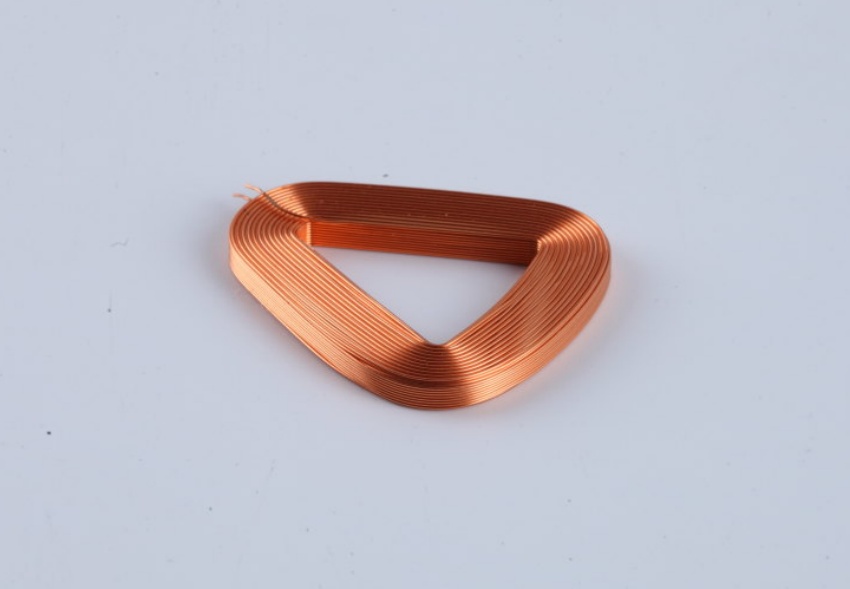
When I first started in this business, I underestimated how much a small change in shape could affect a coil's performance. We made a prototype for a client that fit perfectly, but its inductance was all over the place. That was a tough lesson. It taught us that we can't just focus on the physical shape; we have to manage the electrical properties with equal care. This is where our engineering experience and quality control processes make a huge difference for our customers.
Electrical Performance Consistency
An irregular shape creates an irregular magnetic field. A corner, a bend, or a non-uniform density of windings can create electrical "hot spots" or dead zones. To solve this, we use simulation software before we even start winding. This helps us predict the inductance and Q-factor and suggest minor design tweaks to improve performance. After manufacturing, every batch of coils is tested on an LCR meter. We don't just test one or two; we have a sampling plan to ensure the entire batch meets your specifications for inductance, resistance, and quality factor.
Structural Integrity and Durability
A round coil is naturally strong. An odd-shaped coil, with its bends and angles, can have weak points. The wire can be stressed during the secondary shaping process, which could damage the thin enamel insulation. To prevent this, we primarily use self-bonding wire2. After winding, we heat the coil, which melts the wire's outer bonding layer and fuses the windings into a single, solid component. For extra durability, we can also apply epoxy or place the coil in a custom plastic housing. We ensure the coil is not just the right shape but also strong enough to withstand handling, assembly, and use in the final product.
Conclusion
Odd-shaped air core coils solve unique design problems. With the right manufacturing partner, custom tooling, and rigorous testing, you can turn your complex concept into a reliable, mass-produced component.