Custom Coil Winding Services can solve a real sourcing problem when a standard coil cannot meet your electrical, mechanical, or space requirements. If the wrong coil is selected, your product may suffer from heat, signal loss, weak coupling, or unstable performance. I use this guide to help buyers evaluate custom coils with clearer technical and procurement criteria.
Custom Coil Winding Services help buyers design and source coils made to specific inductance, resistance, geometry, wire type, core structure, and assembly requirements. A qualified supplier should support design review, precision winding, material verification, sample testing, and scalable production so the coil performs reliably in the final application.
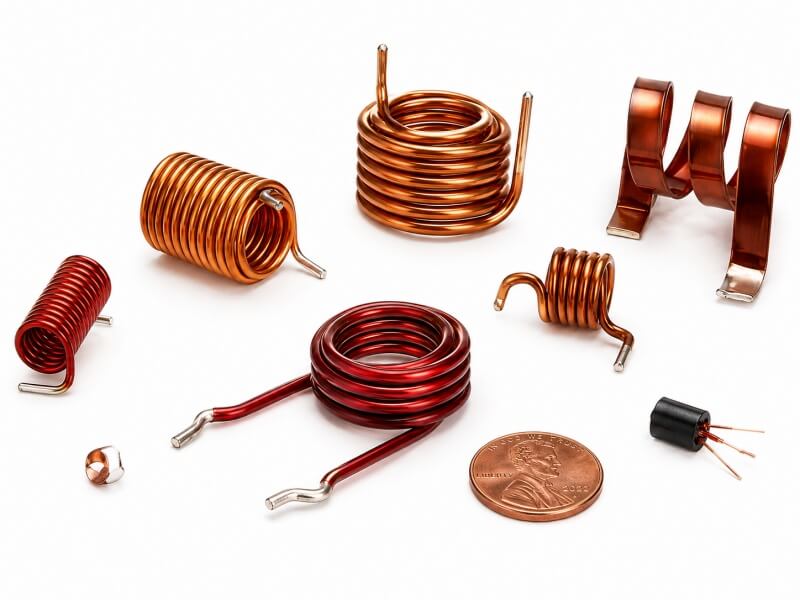
A custom coil is not only a wound copper part. It is a component that connects design intent, manufacturing control, and application performance. Below, I will break down how I evaluate coil types, winding equipment, quality controls, materials, and supplier capability before moving from prototype to production.
What Are Custom Coil Winding Services?
A buyer often starts with a problem that looks simple: “I need a coil.” The difficulty appears later, when the coil must fit a small space, pass heat limits, meet inductance tolerance, or connect cleanly to an assembly. Custom Coil Winding Services address that gap between catalog parts and real product requirements.
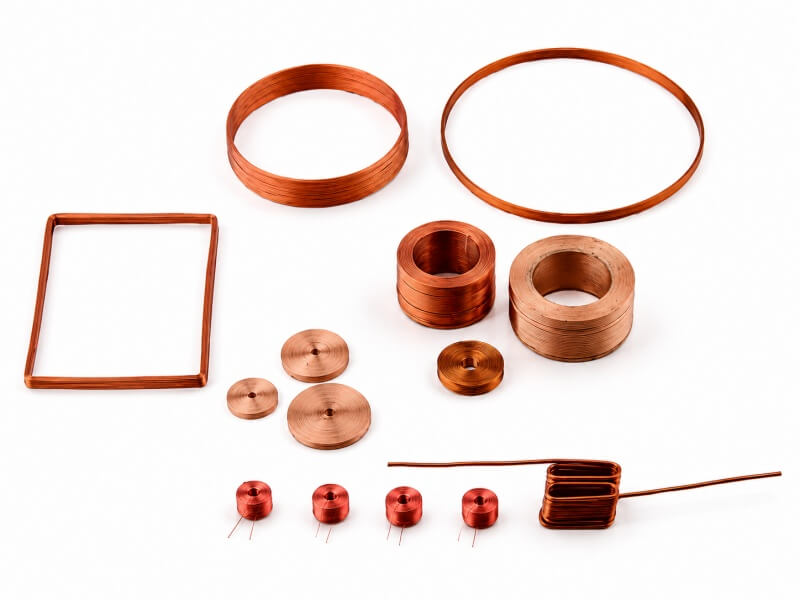
Custom Coil Winding Services are manufacturing and engineering services used to produce coils according to customer-specific drawings, samples, electrical targets, or application constraints. They can include wire selection, winding method, tooling, adhesive, terminal lead assembly, core assembly, inspection, testing, and production planning.
Dive Deeper
I usually explain custom winding as a combination of design support + precision manufacturing + quality verification. The coil itself may look small, but its performance can affect the entire device. This is especially true in wireless charging, RFID, motor control, solenoid actuation, magnetic sensing, and high-frequency electronics.
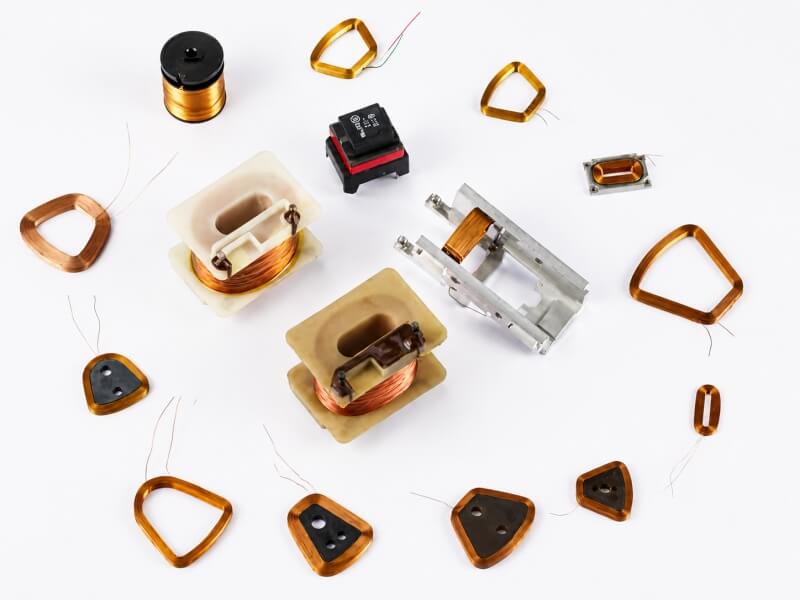
At JHCOILS, we work with several custom coil categories. Buyers can use these categories to organize their RFQ and supplier comparison:
| Coil type | Common applications | Key evaluation points |
|---|---|---|
| custom inductor coils | Power electronics, filters, control boards | Inductance, DCR, current rating, thermal rise |
| custom magnetic coils | Solenoids, electromagnets, magnetic assemblies | Magnetic force, core material, insulation, lead wires |
| custom antenna coils | RFID, NFC, wireless signal transfer | Frequency, Q value, geometry, resonance tuning |
| custom wound coils | Special assemblies, research devices, compact products | Winding precision, tolerance, shape, repeatability |
| wireless charging coils | Consumer electronics, medical devices, smart hardware | Coupling efficiency, heating, shielding, size |
| RFID coils | Access control, tags, readers, identification systems | Reading distance, frequency stability, antenna matching |
What Buyers Should Define First
Before I quote or review a coil, I prefer to see a few basic inputs:
Electrical targets
Buyers should share inductance, resistance, operating frequency, voltage, current, and tolerance.Mechanical constraints
Buyers should provide outer diameter, inner diameter, height, lead length, bobbin requirement, and installation space.Material expectations
Buyers should define copper wire, Litz wire, silk-covered copper wire, copper-clad aluminum, core material, and insulation needs.Environmental limits
Buyers should share operating temperature, humidity, vibration, sealing requirements, and ventilation conditions.Production stage
A prototype coil and a mass-production coil may require different tooling, inspection plans, and process controls.
In my experience, the most successful projects begin with open discussion. A buyer may have a drawing, but the drawing may not fully explain the application. For example, two coils with the same inductance can behave differently if one works at low frequency and another works in an RFID or wireless charging circuit. That is why I always recommend qualified engineering evaluation for application-specific decisions.
When Should Buyers Choose Custom Coil Winding Services?
Many teams begin with off-the-shelf coils because they are fast and easy to test. The problem starts when a standard part creates a mechanical conflict, heat issue, or unstable electrical result. Custom Coil Winding Services become useful when the product needs performance that catalog coils cannot provide.
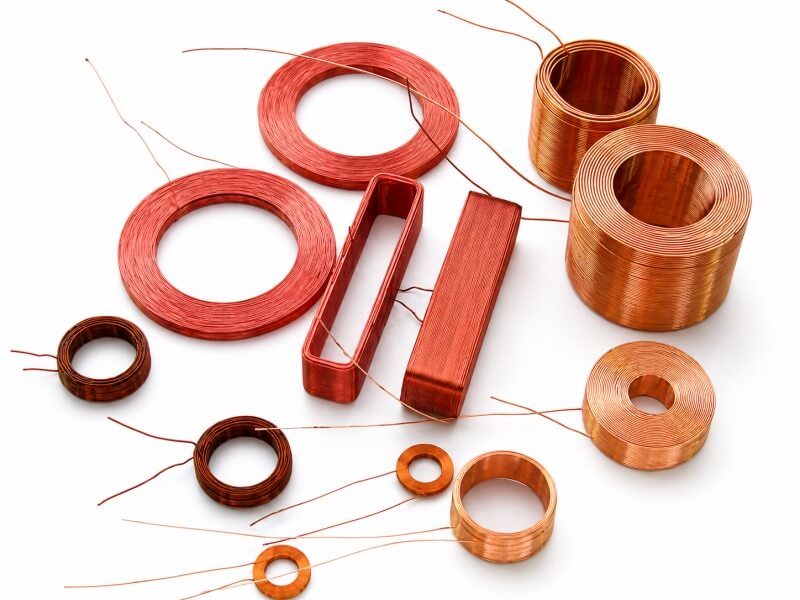
Buyers should choose Custom Coil Winding Services when the coil must meet specific size, inductance, resistance, frequency, thermal, assembly, or certification-related requirements. A custom supplier can adjust wire type, turns, winding pattern, adhesive, core, lead wires, and process controls to fit the final product.
Dive Deeper
I often see buyers move from standard coils to custom coils for one of three reasons: space, performance, or production reliability. A catalog component may work during early testing, but it may not remain the best choice after the enclosure, PCB layout, thermal design, or final assembly is fixed.
Common Reasons to Choose Custom Winding
The available space is limited.
A coil may need to fit inside a thin housing, around a core, near a magnet, or under a plastic cover.The electrical performance is not stable enough.
The design may need a specific inductance tolerance, Q value, DCR, or resonance behavior.The product generates too much heat.
Wire diameter, winding density, copper loss, ventilation, and adhesive selection can affect heat rise.The coil must be integrated into an assembly.
Some projects need terminal lead wires, iron cores, magnet cores, brackets, connectors, or protective layers.The application needs repeatable production.
A hand-wound sample may pass one test, but it may not be scalable for thousands or millions of units.
Example: Tight-Space Coil Applications
Our proprietary high-temperature adhesive formulation allows coils to withstand temperatures above 200°F in suitable applications. This type of material choice can help when ventilation is limited. However, I still tell buyers to verify thermal performance inside their real product, because enclosure design and duty cycle can change results.
For compact devices, buyers should not only ask, “Can you make this coil?” They should also ask:
“Can this coil maintain stable performance after assembly, heating, handling, and continuous use?”
That question changes the procurement conversation. It moves the project from simple part sourcing to manufacturing quality planning.
Off-the-Shelf vs. Custom Coil Decision Table
| Evaluation item | Standard coil | Custom coil |
|---|---|---|
| Fast initial testing | Strong | Medium |
| Exact mechanical fit | Limited | Strong |
| Unique inductance target | Limited | Strong |
| Integrated lead wires or core | Limited | Strong |
| Cost at very low volume | Often lower | Sometimes higher |
| Cost after optimization | Variable | Can be lower |
| Production repeatability | Depends on supplier | Strong if process is controlled |
I do not recommend custom winding for every project. If a standard coil meets all requirements and the supplier is stable, it may be the best procurement option. But when the coil becomes part of the product’s competitive performance, custom design and process control are usually worth evaluating.
How Do Custom Coil Winding Services Improve Manufacturing Quality Control?
A coil can fail quietly before it fails visibly. The buyer may notice weak RFID reading distance, poor charging efficiency, high temperature, or inconsistent motor behavior. Custom Coil Winding Services improve control because the winding process, material selection, and testing plan can be matched to the application.
Custom Coil Winding Services improve manufacturing quality control by defining the coil specification, controlling winding tension and turns, verifying material compliance, testing electrical values, and documenting production data. Precision winding equipment and in-process inspection reduce variation between samples, pilot runs, and mass production batches.
Dive Deeper
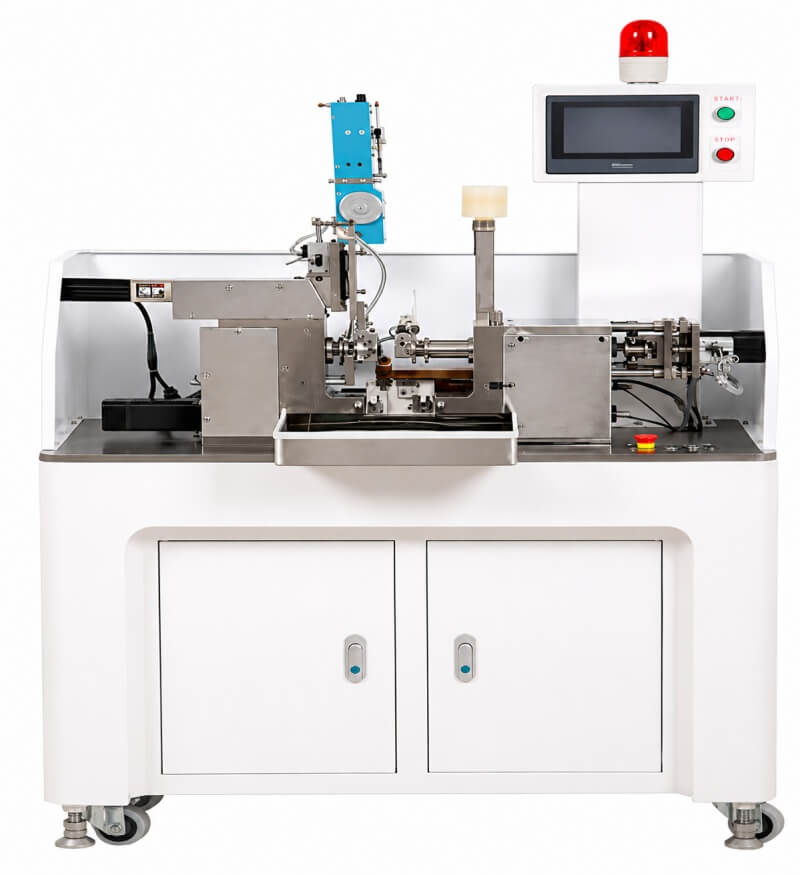
For technical buyers, the winding machine matters because it affects repeatability. In our production context, precision winding machines use mechanical optimization, imported servo motors, bearings, and ball screws to improve movement control. A touch screen interface also makes operation and training easier for production staff.
I do not present a machine feature as a guarantee by itself. I treat it as part of the process capability that buyers should evaluate with samples, test records, and batch inspection data.
Winding Machine Features Buyers Should Ask About
| Feature | Why it matters to buyers |
|---|---|
| Touch screen operation interface | Reduces training time and operator error |
| Intelligent monitoring | Supports stable production and faster issue detection |
| 24-hour continuous production capability | Helps with large-volume orders and production planning |
| Fully automatic line compatibility | Supports unmanned workshop and scalable output |
| Imported servo motor, bearing, and ball screw | Improves precision, positioning, and winding consistency |
| Automatic logging | Helps trace process records and production data |
| Automatic height adjustment | Supports consistent coil dimension control |
| Squeezing and reshaping | Helps coils meet final shape and assembly requirements |
Key Quality Control Points
I like to separate coil quality control into three stages.
1. Incoming Material Control
The wire and auxiliary materials must match the project requirements. Our coils can use:
- Magnet copper wire
- Litz copper wire
- Silk-covered copper wire
- Copper-clad aluminum wire
- Adhesive or bonding material
- Bobbins, cores, terminals, and lead wires
All materials used in production should meet required standards such as SGS and RoHS, where applicable. Buyers should request documents and verify that those documents match the exact material batch and project requirement.
2. In-Process Control
This stage controls the winding itself. Important parameters may include:
- Number of turns
- Winding direction
- Tension
- Layer arrangement
- Coil height
- Outer diameter and inner diameter
- Lead wire position
- Soldering or termination quality
A small variation in winding tension can change the final shape. A small variation in turns can change inductance. That is why automatic logging and controlled machine settings can be helpful for repeatability.
3. Final Inspection and Testing
Final coil inspection may include:
- Inductance test
- Resistance test
- Hi-pot or insulation test when required
- Continuity test
- Dimensional inspection
- Visual inspection
- Pull force test for lead wires
- Thermal test or calibration for special applications
JHCOILS uses equipment that supports computer data acquisition for electrical tests and calibration requirements. In some projects, this helps us make thermal measurements and component calibrations that would be difficult with simple manual checks. Still, buyers should define the acceptance criteria before production begins. Clear criteria protect both sides.
How Should Buyers Compare Custom Coil Winding Services Suppliers?
Supplier selection can feel confusing because many coil factories show similar product photos. The risk is that a buyer chooses based only on unit price, then discovers problems during testing or mass production. Custom Coil Winding Services should be compared through capability, communication, quality control, and manufacturability support.
Buyers should compare Custom Coil Winding Services suppliers by reviewing engineering support, winding equipment, material traceability, test capability, quality documentation, prototype speed, production capacity, and experience with similar applications. The best supplier is not always the cheapest; it is the one that reduces technical and supply-chain risk.
Dive Deeper
I have learned that a reliable custom coil supplier must act as more than a winding shop. In many projects, buyers need support from initial design through product development, testing, and full production release. This is especially true for overseas electronic assembly plants, motor manufacturers, EMS factories, RFID companies, wireless charging solution providers, and research institutes.
Supplier Evaluation Checklist
Buyers can use this checklist before placing a sample or production order:
Application understanding
Does the supplier ask about operating frequency, current, installation space, and thermal conditions?Design for manufacturability support
Does the supplier suggest practical changes to improve yield, cost, or assembly?Precision winding capability
Does the supplier use equipment suitable for the required tolerance and volume?Material options
Can the supplier work with copper wire, Litz wire, silk-covered wire, or other required conductors?Testing capability
Can the supplier test inductance, resistance, dimensions, insulation, and special requirements?Documentation
Can the supplier provide material documents, inspection reports, and production records where required?Scalability
Can the supplier move from prototype to pilot run to mass production with stable quality?Communication quality
Does the supplier respond clearly to drawings, samples, and engineering questions?
Practical Supplier Comparison Table
| Supplier factor | Low-risk signal | High-risk signal |
|---|---|---|
| Engineering communication | Supplier asks technical questions | Supplier quotes without understanding the application |
| Sample process | Clear sample plan and test criteria | No defined acceptance standard |
| Winding equipment | Precision machines and process monitoring | Manual process without control records |
| Material control | RoHS/SGS documents available for verification | Material source is unclear |
| Production planning | Pilot run before mass production | Direct jump from one sample to bulk order |
| Cost reduction | Supplier suggests process optimization | Supplier only reduces price by changing materials |
Cost Should Be Evaluated Carefully
A lower unit price may look attractive. However, coil cost includes more than copper and labor. Buyers should consider:
- Scrap rate
- Rework risk
- Testing time
- Assembly failure cost
- Shipping delays
- Product returns
- Engineering time lost during troubleshooting
When we cooperate with customers, we often look for cost reduction through process optimization planning and design for manufacturability analysis. For example, a small adjustment to coil shape or lead wire direction can make the product easier to assemble. A material change may also reduce cost, but I only suggest that after checking performance and buyer requirements.
The best supplier relationship is collaborative. The buyer brings application knowledge. The coil manufacturer brings winding process knowledge. When both sides share information early, the final coil is usually more stable and easier to produce.
What Specifications Should Buyers Share Before Requesting Custom Coil Winding Services?
A vague RFQ creates slow communication and uncertain pricing. A buyer may send only a photo and ask for a quotation, but the supplier cannot confirm performance from appearance alone. Custom Coil Winding Services require clear input data so the supplier can design, sample, test, and quote responsibly.
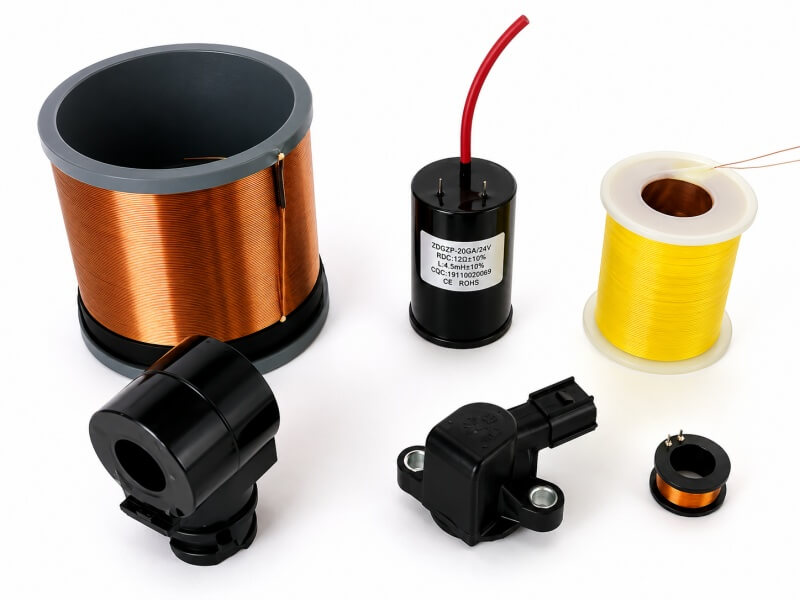
Before requesting Custom Coil Winding Services, buyers should share electrical specifications, mechanical dimensions, wire material, operating environment, application type, quantity forecast, testing standards, and assembly requirements. A drawing, sample, or schematic can reduce misunderstanding and speed up prototype development.
Dive Deeper
I prefer to receive an RFQ package that includes both engineering and procurement information. The engineering data helps us design the coil. The procurement data helps us plan tooling, materials, production capacity, and cost.
RFQ Specification Checklist
| Specification | Example information to provide |
|---|---|
| Coil type | Inductor, RFID antenna, wireless charging coil, solenoid coil |
| Inductance | 10 µH, 100 µH, 1 mH, or target range |
| Resistance | Maximum DCR or target value |
| Current | Rated current, peak current, duty cycle |
| Frequency | 125 kHz, 13.56 MHz, power conversion frequency, etc. |
| Dimensions | OD, ID, height, thickness, available space |
| Wire type | Magnet copper wire, Litz wire, silk-covered wire |
| Core or bobbin | Air core, ferrite core, iron core, magnet core, plastic bobbin |
| Lead wires | Length, color, gauge, connector, stripping, tinning |
| Temperature | Operating and storage temperature |
| Compliance | RoHS, REACH, SGS documents, customer-specific requirements |
| Quantity | Prototype quantity, pilot run, annual forecast |
| Testing | Inductance test, resistance test, thermal test, pull test |
Bring calculation inputs to your RFQ.
Choose a calculator for winding space, wire, air-core geometry, ferrite AL or tuning, then share the inputs with your drawing.
Find a coil design calculatorInclude application conditions and required test conditions with the calculation results.
Why Application Context Matters
A coil drawing may not tell the full story. For example:
- A wireless charging coil must be evaluated with the transmitter, receiver, shielding, gap, and alignment.
- An RFID antenna coil must be tuned with the circuit and checked for reading distance.
- A solenoid coil must be reviewed with duty cycle, force requirement, voltage, and thermal rise.
- A motor-related coil may require attention to vibration, insulation, and repeatable winding geometry.
I always tell buyers that the coil should be tested in the real system, not only on a bench meter. Bench measurements are useful, but they do not replace application testing.
Good RFQ Example
A strong RFQ may look like this:
“We need a custom RFID coil for a 13.56 MHz reader module. The available space is 35 mm × 25 mm × 2 mm. The target inductance is 1.2 µH ±5%. The product will operate from -10°C to 60°C. We need 20 samples first, then 5,000 pieces per month after validation. Please provide material options and test report format.”
This type of request allows a supplier to respond with useful feedback. It also helps the buyer compare suppliers on equal terms.
Prototype to Production Plan
For B2B buyers, I recommend this development path:
Concept review
The buyer shares requirements, drawings, and application goals.Design proposal
The supplier suggests coil structure, material, and process route.Sample production
The supplier makes prototypes for electrical and mechanical evaluation.Application testing
The buyer tests the coil in the final device or system.Pilot production
Both sides check repeatability, yield, packaging, and inspection criteria.Mass production
The supplier follows approved specifications and quality control records.
This approach reduces surprises. It also gives procurement teams stronger evidence before approving a supplier for long-term production.
Frequently Asked Questions
What materials are commonly used in custom coil winding?
Common materials include magnet copper wire, Litz copper wire, silk-covered copper wire, and copper-clad aluminum wire. The right choice depends on frequency, resistance, current, heat, space, and cost. Buyers should also verify insulation, adhesive, core, and compliance documents for the exact project.
How do I know if I need a custom coil instead of a standard coil?
You may need a custom coil if a standard part cannot meet your size, inductance, resistance, frequency, thermal, or assembly requirements. Custom winding is also useful when the coil must integrate with lead wires, cores, connectors, RFID circuits, wireless charging modules, or compact product housings.
What documents should I request from a coil winding manufacturer?
You can request drawings, material specifications, RoHS or SGS-related documents, inspection reports, test data, and production records when relevant. Buyers should verify that certificates and documents apply to the exact material, supplier, and production batch used for their custom coil project.
How long does custom coil sampling usually take?
Sampling time depends on coil complexity, material availability, tooling, and testing requirements. Simple air coils may be faster, while coils with special wire, cores, assemblies, or tight tolerances may need more time. I recommend confirming the sample schedule after the supplier reviews complete technical data.
Can a custom coil supplier help reduce cost?
Yes, a qualified supplier can often reduce cost through design for manufacturability, winding process optimization, material selection, and assembly simplification. However, cost reduction should not compromise electrical performance, thermal safety, compliance needs, or long-term reliability in the final application.
Conclusion
Custom Coil Winding Services are most valuable when buyers need a coil that fits real product requirements, not only catalog specifications. I recommend evaluating the supplier’s materials, winding equipment, testing ability, documentation, and engineering communication before production approval. If you need custom inductor coils, RFID coils, wireless charging coils, magnetic coils, or precision wound assemblies, contact JHCOILS with your drawing, sample, or application requirements. We can review the design and help you plan a practical path from prototype to production.