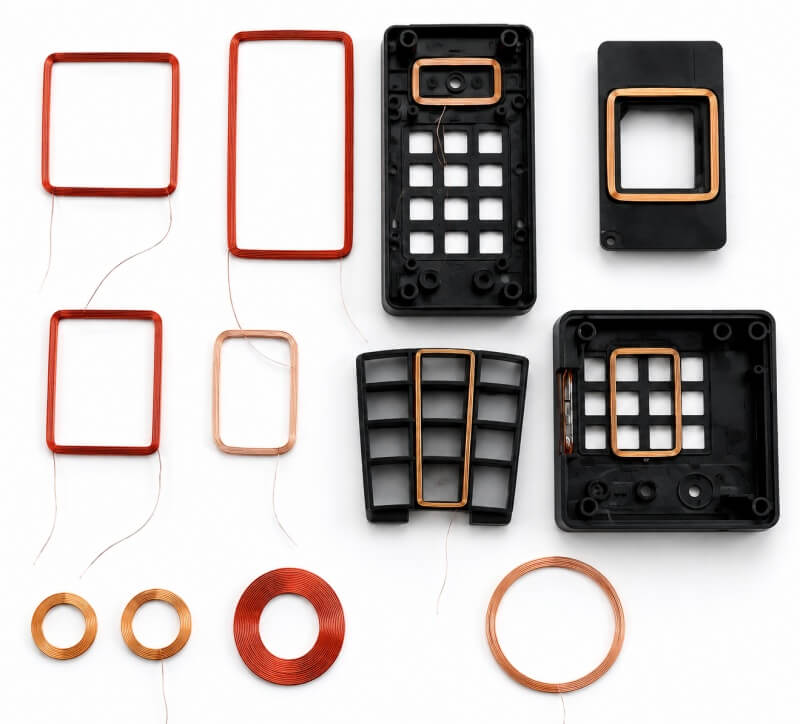
RFID (radio frequency identification) is the broad technology category. It uses radio waves to exchange data between a tag or card and a reader. “ID card” and “IC card” are common access-control industry terms for two types of contactless RFID credentials, but the names are not universal technical standards.
An ID card usually refers to a low-frequency 125 kHz proximity card that transmits a fixed identification number. It is commonly used for simple access control and attendance systems and is typically read-only or has very limited data capability.
An IC card is a smart card containing an integrated circuit. Contactless IC cards commonly operate at 13.56 MHz and may support read/write memory, authentication, encryption, and multiple applications, depending on the chip and protocol. Some 13.56 MHz cards can communicate with NFC-enabled devices, but only when the frequency, protocol, and access permissions are compatible.
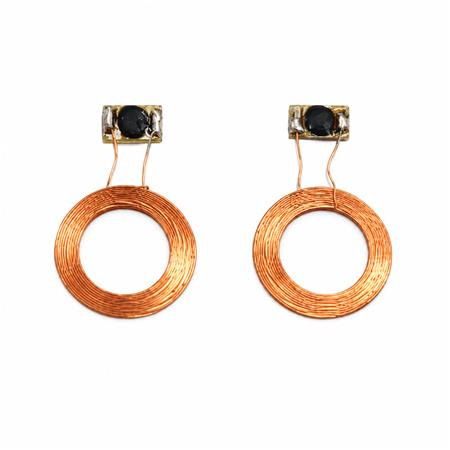
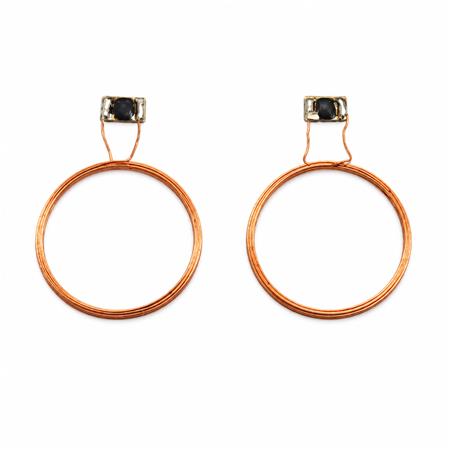
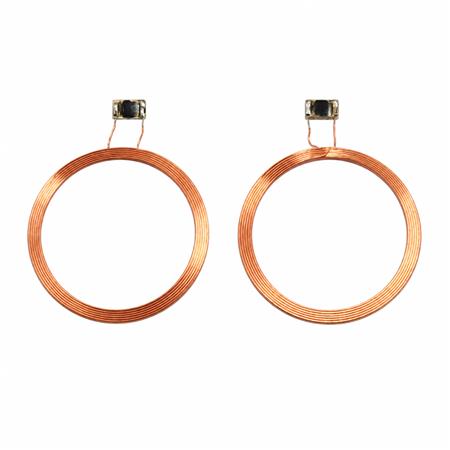
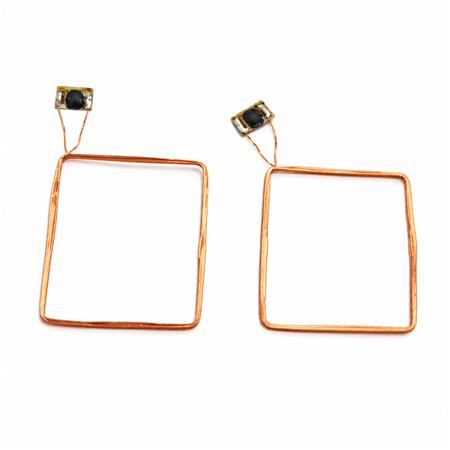
Both types use a chip, an antenna coil, and a compatible reader for contactless identification. The main differences are their usual operating frequency, memory capacity, security functions, and reader compatibility. For a new design, confirm the chip, protocol, target frequency, required read range, and available coil space before selecting or customizing the antenna coil.