Are you struggling to find a motor for precise, small-scale linear motion? Traditional options can be bulky and complex, but a voice coil motor might be the simple, powerful solution you need.
A voice coil motor (VCM) is a type of direct-drive linear motor that creates highly precise and fast back-and-forth movement. It works by passing an electric current through a coil in a magnetic field, causing it to move. This is the same principle as a loudspeaker.
You've probably heard the term before, but maybe you're not sure how it connects to something that creates motion instead of sound. It's a simple concept that unlocks some powerful capabilities for modern electronics and machinery. Let's dig into where this technology came from, what makes it so special, and how you can use it in your next project.
Where Does the Name 'Voice Coil' Come From?
Does the name "voice coil motor" seem a bit strange? This unusual name can be confusing, but understanding its origin in old-school speakers makes the whole concept click into place.
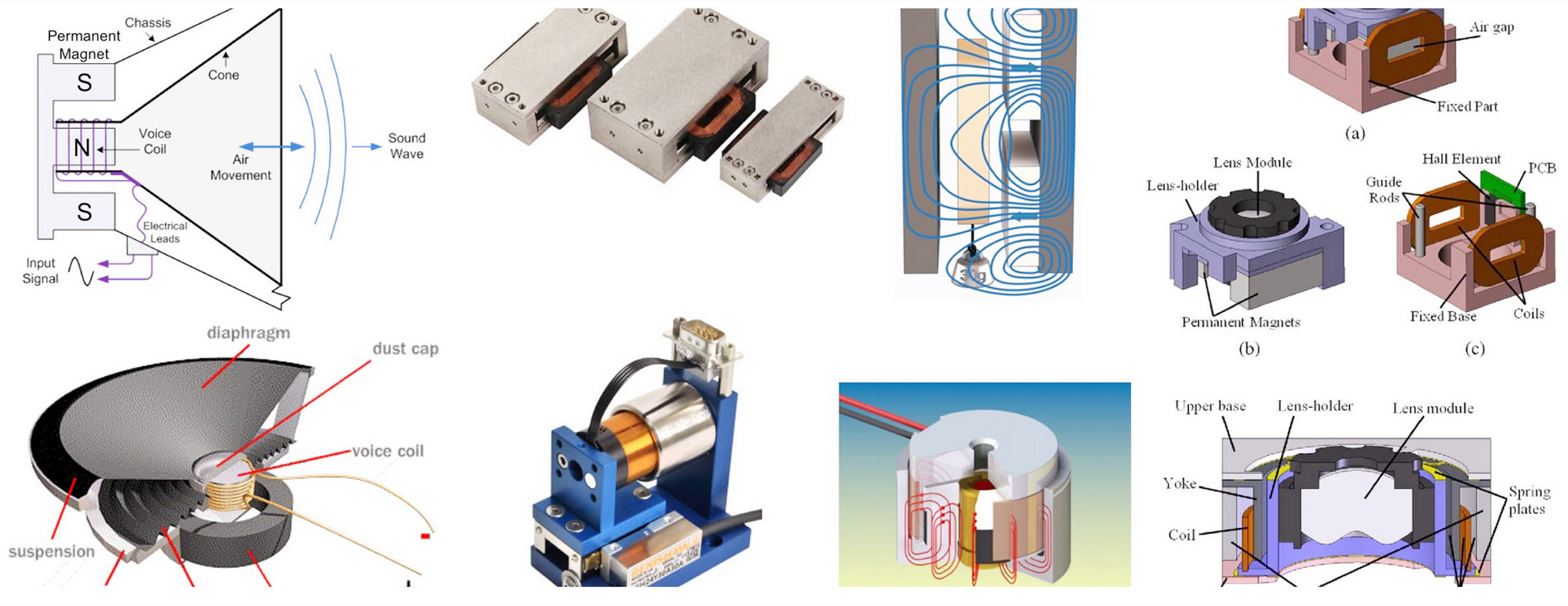
The term "voice coil" actually comes from loudspeakers. In a speaker, this coil gets an electrical audio signal, which makes it move in a magnetic field. This movement vibrates a cone to produce sound—or a "voice." This exact component is just used for motion in a VCM.
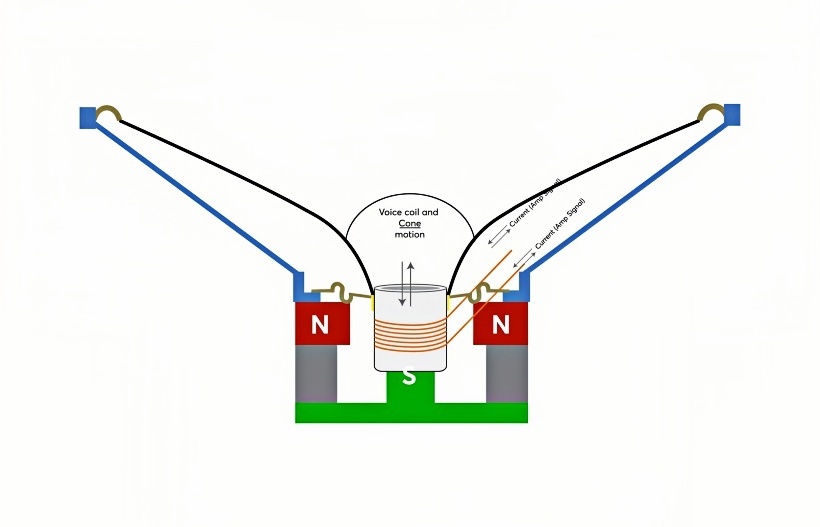
The basic science behind both a speaker and a voice coil motor is the Lorentz force. When you pass an electric current through a wire (the coil) that is inside a magnetic field, it creates a force. This force pushes the coil, making it move.
In a speaker, the coil is attached to a paper or plastic cone. As the audio signal changes, the coil moves back and forth rapidly, vibrating the cone and creating the sound waves we hear as music or speech.
In a voice coil motor, we take away the speaker cone. Instead, the coil is attached to a part that needs to be moved precisely, like a lens in a camera or a tool in a manufacturing machine. The principle is identical; we just use the motion for a different purpose.
| Feature | Loudspeaker | Voice Coil Motor (VCM) |
|---|---|---|
| Core Component | Voice Coil | Voice Coil |
| Principle | Lorentz Force | Lorentz Force |
| Input | Electrical Audio Signal | Controlled Electrical Current |
| Output | Sound Waves | Linear Motion |
| Purpose | To make sound | To move an object precisely |
So, a voice coil motor is just a clever re-application of speaker technology. It's a great example of how a simple physics principle can be used in completely different ways.
What are the Main Advantages of Using a Voice Coil Motor?
Choosing the right motor for a project is a big decision. Making the wrong choice can lead to bad performance or a bulky design. Voice coil motors offer a unique set of benefits.
VCMs give you high acceleration, zero cogging, and very precise linear control. They have fewer mechanical parts than screw-type motors, which means almost no hysteresis or backlash. This makes them perfect for fast, repeatable, and small-scale movements.
Let's break down these advantages. The beauty of a VCM is its simplicity. Because the coil and magnet assembly don't touch, there is almost no wear and tear. This is a huge benefit over "screw-type" motors that rely on mechanical contact, which can wear out over time. This non-contact design means VCMs are extremely reliable and require very little maintenance.
From a performance standpoint, they are fantastic. They offer a high power-to-mass and power-to-volume ratio, meaning you get a lot of force from a small and light motor. With "zero cogging," the motion is incredibly smooth. And with low-to-no hysteresis, the motor's movement is predictable and repeatable every single time. Best of all, they can accelerate and decelerate extremely quickly.
For control, VCMs are a designer's dream. Their force output is directly proportional to the input current, making them very easy to control. They can hold a position with incredible accuracy. In fact, their positioning ability is virtually infinite—the only limit is the precision of the encoder or sensor you pair with them. These features make voice coil motors the best choice for any application needing precise, short-distance linear motion.
Where are Voice Coil Motors Used in Real-World Applications?
Technical advantages sound good, but it can be hard to see how they apply in the real world. Without examples, a component can seem abstract. Let's look at how VCMs are changing industries.
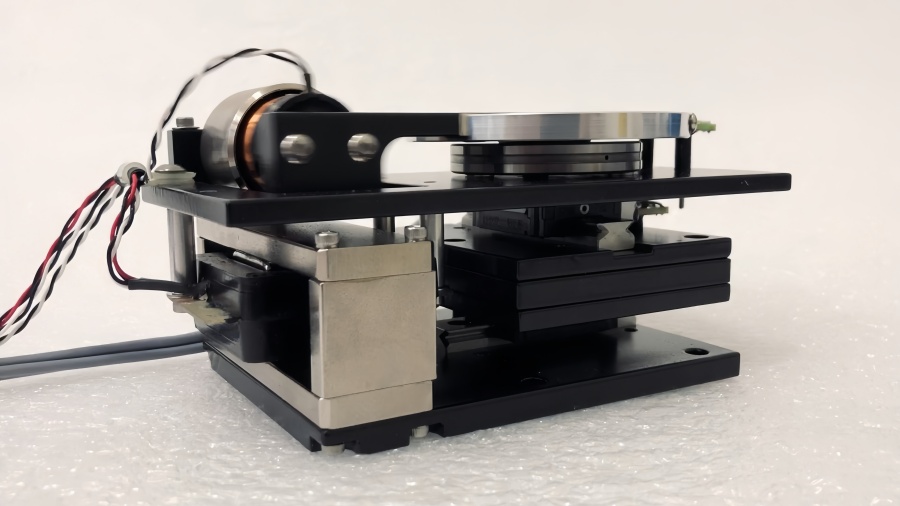
Voice coil motors are key in semiconductor manufacturing for lithography, in medical devices for precise dispensing, in automation for pick-and-place tasks, and in laser machining for focus control. Their speed, precision, and clean operation are why they are chosen.
Here's a deeper look at where you'll find them:
Semiconductor Manufacturing
In the high-stakes world of making computer chips, you need speed and precision. VCMs are perfect for the short, exact movements required in photolithography. They can move and settle very quickly, control vibration, and adjust the focus of optical parts. For tasks like wire bonding or pick-and-place, the high acceleration of VCMs is a huge advantage—some can even reach 200g of acceleration. Unlike ball screws, many VCMs work well in vacuum and cleanroom environments because their non-contact design prevents gas leaks and contamination.
Biomedical Devices
For medical equipment, accuracy can be a matter of life and death. VCMs offer better precision than traditional servo motors, often at a lower cost. Their compact design is great for today's smaller devices. For machines that dispense tiny amounts of liquids or powders, the low hysteresis of a VCM ensures every dose is exact. When used with a good encoder, they can achieve sub-micron level force and position control.
Automated Production
The same high-speed performance that makes VCMs useful in semiconductor manufacturing also makes them great for general automation. Think of factory lines with robots that need to pick up small parts and place them accurately. VCMs are used in these systems, as well as in automated inspection machines that require fast, precise autofocus for their cameras.
Laser Micromachining
When a laser cuts, engraves, or marks a material, its focus must be perfect. A VCM can be used to control the Z-axis of the laser system. It rapidly adjusts the laser's focus to handle different material thicknesses or surface shapes. This allows the system to perform complex tasks efficiently and with high quality.
| Industry | Application | Key VCM Benefit |
|---|---|---|
| Semiconductors | Lithography, Wire Bonding | High Speed, High Precision, Cleanroom Compatible |
| Biomedical | Fluid Dispensing, Instruments | High Precision, Compact Size, Low Cost |
| Automation | Pick-and-Place, Inspection | High Speed, Reliability, Precise Autofocus |
| Laser Machining | Z-Axis Focus Control | Fast Response, High Accuracy |
How Can You Source High-Quality Voice Motor Coils for Your Project?
You've decided a VCM is perfect for your design, but where do you get the most important part—the coil? Using a low-quality coil can ruin your motor's performance. Partnering with a professional manufacturer is the only way to go.
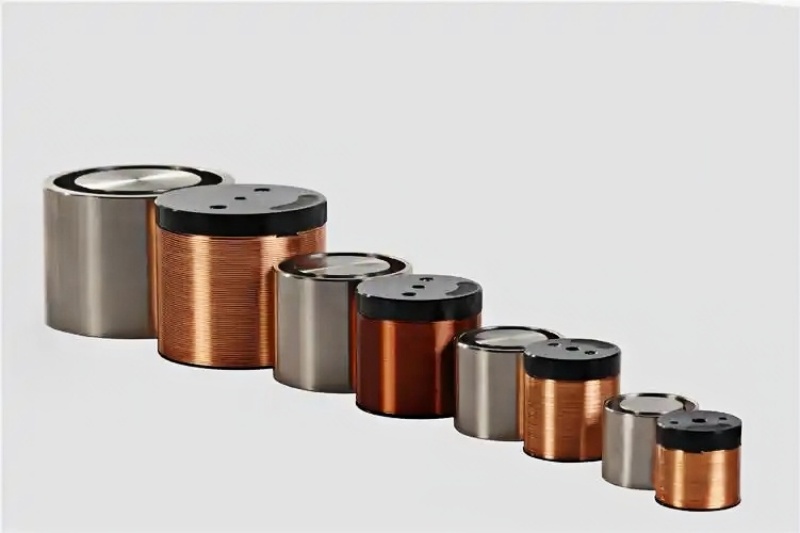
For top-quality voice motor coils, you need a specialized manufacturer like us, JHCoils. As an ISO-certified factory, we provide professional custom coil winding services for motor companies. We use a complete testing system to ensure every single coil meets your exact needs.
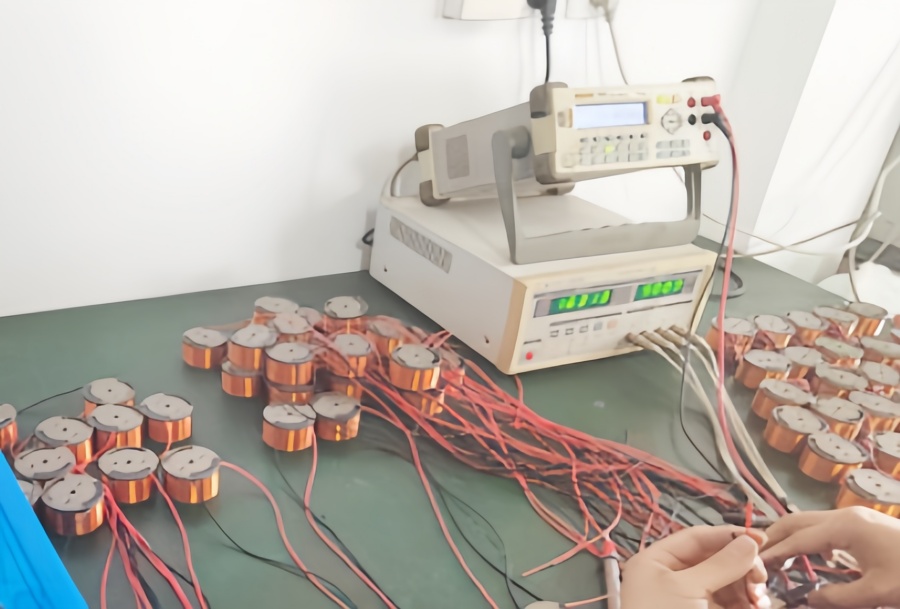
As a professional coil manufacturer based in China, we understand that the coil is the heart of your voice coil motor. The performance of your entire assembly depends on the quality of our winding. That's why we are an ISO-certified factory, which means our processes are documented and consistent, guaranteeing a reliable product every time.
I remember working with a new client who was developing a high-speed medical device. They were having problems with inconsistent performance from their VCMs. We took a look, and the issue was their previous coil supplier. The coils were not wound to a tight tolerance. After they switched to our precision-wound coils, their motor's performance became predictable and reliable. Their device passed validation, and they are now one of our biggest customers.
We provide coils for all types of VCMs, whether it's a standard cylindrical motor or a compact square one. Our goal is to give you a product with a great price-to-performance ratio. We help you improve your motor's performance while keeping your budget under control. We don't just sell coils; we provide testing and solutions to help you succeed.
Conclusion
In short, voice coil motors use speaker technology to create fast, precise linear motion. Their unique advantages make them ideal for high-tech industries, and choosing a high-quality coil is essential.