Struggling to tell one magnet coil from another? Choosing the wrong type can derail your project, wasting time and money. Understanding the classifications is the key to getting it right.
Magnet coils are primarily classified in four ways: by their inductive form (fixed or variable), magnetic structure (air or cored), working condition (function), and winding structure (how the wire is wrapped).

I've been in the coil winding business for a long time, and I see engineers get confused by the sheer variety of coils available. It's not just a piece of wire. The way it's made, what's inside it, and its intended job all lead to different classifications. Getting a handle on these categories is the first step to designing a successful product. Let's break down these classifications so you can choose with confidence.
How are coils classified by structure?
The physical look of coils is confusing. A simple glance doesn't tell you how it will perform, and this choice drastically affects your circuit's efficiency and size.
Coils are classified structurally by their core material—like air, ferrite, or iron—and how the wire is wound, such as in a single layer, multiple layers, or a honeycomb pattern.
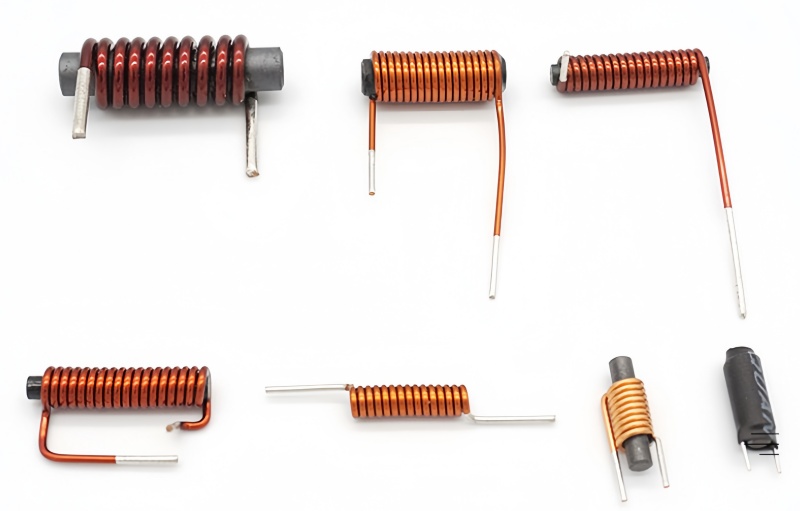
When we manufacture coils, the structure is everything. It's the blueprint that dictates the coil's electrical properties. Two coils might look similar, but a different core or winding style can mean the difference between a product that works perfectly and one that fails. Let's look closer at these structural elements.
Core Structure
The "core" is the material inside the winding. It has a massive impact on the coil's inductance. At my factory, we handle all types, but the choice always comes down to the application's specific needs. An air core1 is just that—it has no magnetic material inside. This is great for high-frequency applications where you need low signal loss. Then you have cores made of magnetic materials like ferrite or iron, which dramatically increase inductance.
| Core Type | Inductance Effect | Common Use Case | My Notes |
|---|---|---|---|
| Air Core | Lowest inductance | High-frequency circuits, RF, wireless charging | We specialize in these. They are stable and don't saturate. |
| Ferrite Core | Significantly increases inductance | Power supplies, EMI filters, transformers | A very common choice for controlling power. |
| Iron Core | Massively increases inductance | Low-frequency applications, audio transformers | Not as common in modern electronics, can be heavy. |
Calculate from the winding geometry.
Estimate inductance, winding dimensions and copper weight for a round or rectangular air-core coil.
Open the air-core coil calculatorFor supported winding layouts. Confirm the finished dimensions and inductance on samples.
Calculate from the core assembly's AL.
Use the specified AL value to estimate inductance or whole turns and review the effect of AL tolerance.
Calculate ferrite inductance and turnsSmall-signal estimate. DC bias, saturation and core loss need separate review.
Winding Structure
The way the wire is wrapped is just as important. A simple single-layer coil is easy to make, but it has limitations. For higher inductance in a smaller space, you need to use more complex winding patterns. The winding style also affects something called "distributed capacitance," which can be a problem at high frequencies. A honeycomb winding, for example, is specifically designed to minimize this.
| Winding Structure | Key Characteristic | Best For |
|---|---|---|
| Single-Layer | Wires are wound side-by-side. | Simple applications, old AM radios. |
| Multi-Layer | Wires are wound in layers on top of each other. | Achieving high inductance in a small space. |
| Honeycomb | Wires are crisscrossed at an angle. | High-frequency, high-Q applications to reduce capacitance. |
| Close Wound | Wires are tightly wound with no space. | Maximizing turns in a given length. |
How are coils classified by their function in a circuit?
A coil isn't just a component; it has a job to do. Using the wrong functional type in your design is like hiring a plumber to do electrical work—it simply won't work.
Coils are classified by their primary function, such as antenna coils for receiving signals, choke coils for blocking AC current, or deflection coils for guiding electron beams in displays.
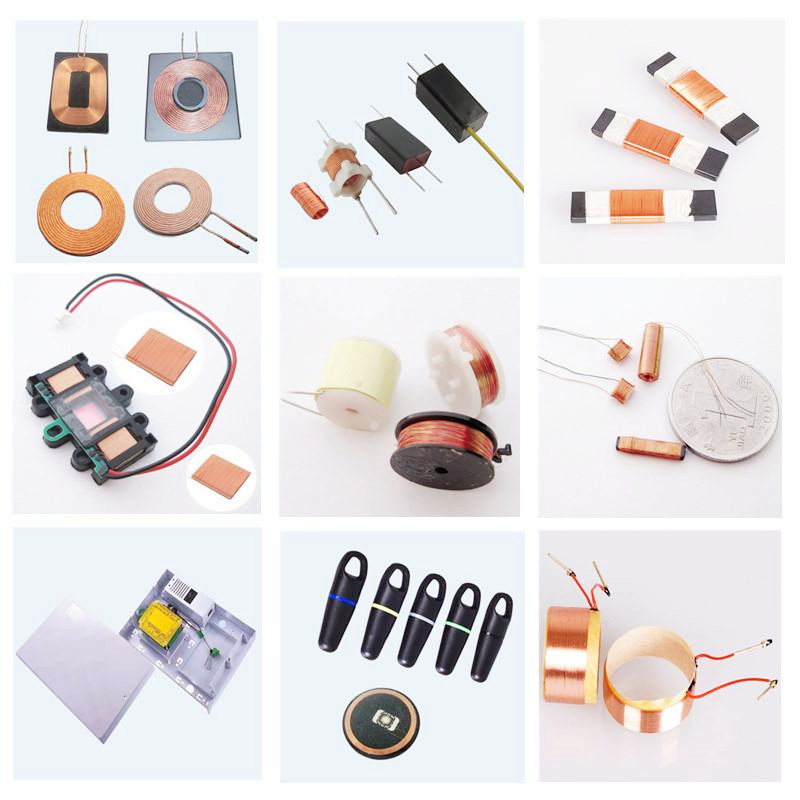
In my experience, this is where the design intent really shows. A customer doesn't just ask for "a coil"; they ask for something that can oscillate at a certain frequency or filter out unwanted noise. The function dictates everything, from the core material to the winding style we just discussed. Let's look at the different "jobs" a coil can have.
Functional Coil Types
Each type is engineered for a specific task. A deflection coil for an old CRT monitor is a world away from a tiny antenna coil in an RFID tag, even though both are fundamentally inductors. Their construction is optimized for their role. For example, a choke coil is designed to have high impedance to alternating current but low resistance to direct current, making it an effective filter.
| Functional Type | Primary Job | Typical Application |
|---|---|---|
| Antenna Coil | Captures radio waves. | Radios, RFID readers, wireless communication. |
| Oscillation Coil | Creates a stable frequency with a capacitor. | Radio transmitters, oscillators. |
| Choke Coil | Blocks AC while letting DC pass. | Power supplies, filters. |
| Notch Coil | Filters out a very specific, narrow band of frequencies. | Audio equipment, signal processing. |
| Deflection Coil | Creates a magnetic field to steer electron beams. | CRT monitors and televisions. |
Inductive Form: Fixed vs. Variable
This is another functional classification. Do you need the inductance value to stay the same, or do you need to adjust it? A fixed inductance coil has a set value that doesn't change. We manufacture thousands of these every day. They are the workhorses of electronics. A variable inductance coil, on the other hand, is designed to be tuned. This is often done by moving the core in or out of the winding. Think of the tuning knob on an old radio—you were likely adjusting a variable capacitor or a variable inductor to select the station. The choice between fixed and variable depends entirely on whether the circuit needs to be adjusted after it's built.
What are some common magnet coils I might see every day?
Theory is great, but what about the real world? You see these components on circuit boards all the time, but it's hard to know what's what without some practical examples.
Common examples include simple single-layer coils in radios, compact honeycomb coils, ferrite core2 coils that boost inductance, and specialized choke or deflection coils for power and display circuits.
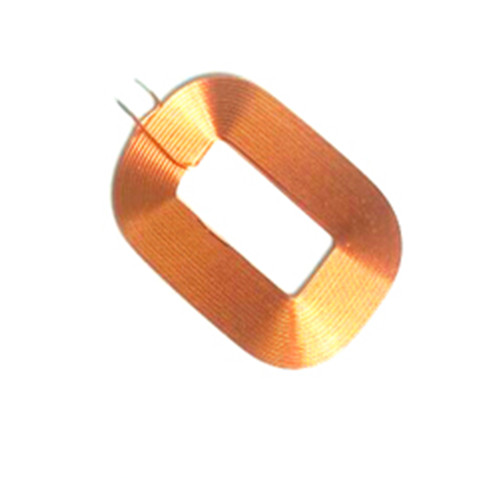
Let's walk through some of the coils you are most likely to encounter. When I look at a circuit board, I can often identify the function of a section just by looking at the types of coils used. Here are a few of the most common ones we produce and see in our clients' products.
Single-layer Coil: This is the most basic type. Imagine wrapping a wire around a paper tube, turn by turn. That's a single-layer coil. They are simple and cheap to produce. You used to see them all the time in transistor radios as the medium wave antenna coil. Because the wires are spread out, they have lower distributed capacitance, which is good for some radio frequency applications.
Honeycomb Coil: If you need high inductance but have very little space, and you're working at a high frequency, the honeycomb coil is your friend. The wire is wound at an angle, creating a criss-cross pattern that looks like a honeycomb. This clever winding technique reduces the capacitance between windings, which improves the coil's quality factor (Q value). We use special honeycomb winding machines to produce these.
Ferrite Core Coil: Take an air core coil and insert a ferrite slug or rod into it. What happens? The inductance shoots up. This allows us to make a high-inductance coil in a much smaller size than an equivalent air core coil. You see them everywhere in power supplies and as EMI filters.
Choke Coil: Its job is to "choke off" alternating current. It's a filter. A high-frequency choke might be very small, while a low-frequency choke used in a power supply line might be quite large and heavy. It's designed to present a high impedance to noise and AC signals you don't want, while letting the steady DC power through.
Deflection Coil: Though less common now with LCD and OLED screens, the deflection coil was essential for old tube-style TVs and monitors. It's a set of coils placed around the neck of the picture tube that creates a magnetic field to bend the electron beam, "painting" the image on the screen. They required high sensitivity and a very uniform magnetic field.
Conclusion
Understanding coil classification by structure, function, and common type is the first step. This knowledge empowers you to select the perfect component for your specific electronic design needs.